

Understanding Property Cycles and Market Growth Trends.
The real estate market is often viewed as one of the most stable and rewarding investment sectors. However, successful property investors understand that real estate does not grow at a constant rate. Instead, it moves through predictable phases known as property cycles. Understanding these property cycles and market growth trends can help investors make informed decisions, maximize returns, and minimize risks.
Whether you are investing in land, residential developments, or commercial property, recognizing where the market stands within a cycle is essential for long-term success.
What Are Property Cycles?
A property cycle refers to the recurring pattern of growth, stability, decline, and recovery that occurs within the real estate market over time. These cycles are influenced by economic conditions, population growth, infrastructure development, government policies, and investor confidence.
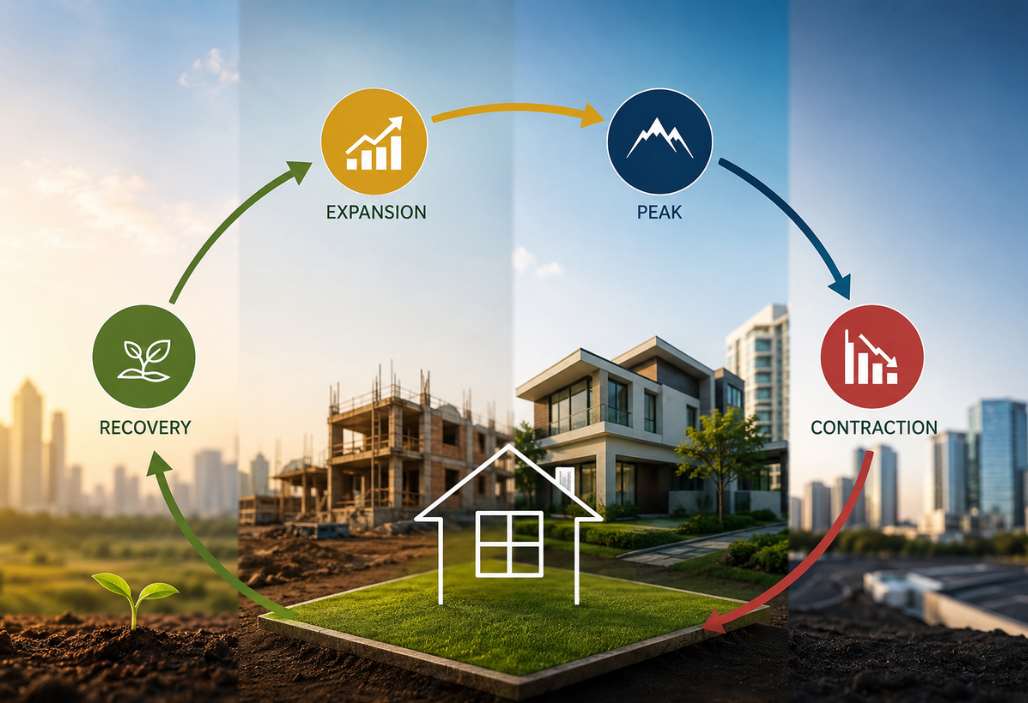
While the duration of each cycle varies, most property markets move through four key stages:
1. Recovery Phase
The recovery stage occurs after a market downturn. Property prices are generally low, demand begins to improve, and investor confidence slowly returns.
At this stage:
- Property values are often undervalued.
- Investment opportunities are plentiful.
- Infrastructure projects may begin attracting interest to new areas.
- Early investors can secure assets before significant appreciation occurs.
For savvy investors, the recovery phase often presents some of the best opportunities to purchase land and property at attractive prices.
2. Expansion Phase
The expansion phase is characterized by strong economic growth, increasing demand, and rising property prices.
Key indicators include:
- Growing population and urbanization.
- Increased construction activity.
- Higher property transaction volumes.
- Improved employment rates.
- Rising demand for residential and commercial developments.
This phase often generates substantial capital appreciation for property owners. Investors who purchased during the recovery phase typically experience significant gains as demand increases.
3. Peak Phase
During the peak stage, property prices reach their highest levels. Demand remains strong, but growth begins to slow as affordability challenges emerge.
Signs of a peak market include:
- Rapidly increasing property prices.
- High investor activity.
- Reduced inventory of quality investment opportunities.
- Slower rate of price growth.
Although opportunities still exist, investors should conduct careful due diligence during this stage to avoid overpaying for assets.
4. Contraction Phase
The contraction phase occurs when demand weakens and market activity slows. Economic uncertainty, rising interest rates, or oversupply can contribute to this stage.
Characteristics include:
- Slower sales activity.
- Reduced property price growth.
- Increased property listings.
- Lower investor confidence.
While some investors view contraction negatively, experienced investors often use this period to identify future growth opportunities and prepare for the next recovery phase.
Factors Driving Property Market Growth Trends.
Understanding market growth trends requires looking beyond property prices alone. Several factors influence long-term real estate appreciation and land value growth.
Infrastructure Development
Major infrastructure projects such as highways, bypasses, rail networks, and utilities often increase accessibility and attract new developments. Areas experiencing infrastructure expansion frequently experience strong property value appreciation.
Population Growth
As populations grow, demand for housing, commercial spaces, and land increases. Rapid urbanization continues to drive real estate demand across many regions, creating long-term opportunities for investors.
Economic Performance
A growing economy typically supports higher employment rates, increased incomes, and stronger purchasing power. These factors contribute to rising demand for property investments.
Government Policies
Land ownership regulations, taxation policies, housing incentives, and development plans can significantly impact real estate market performance. Investors should remain informed about policy changes that may affect property values.
Investor Confidence
Market sentiment plays a major role in real estate growth. Positive expectations often encourage investment activity, while uncertainty can temporarily slow market momentum.
Why Property Cycles Matter to Investors.
Understanding property cycles enables investors to make strategic decisions rather than emotional ones. By identifying market trends early, investors can:
- Buy land before prices accelerate.
- Avoid purchasing during periods of excessive speculation.
- Identify emerging investment hotspots.
- Build long-term wealth through strategic timing.
- Reduce investment risks.
Successful real estate investors focus on market fundamentals and long-term growth potential rather than short-term fluctuations.
Conclusion
Property cycles are a natural part of every real estate market. While no cycle follows an exact timeline, understanding the stages of recovery, expansion, peak, and contraction helps investors make smarter decisions. By monitoring market growth trends such as infrastructure development, population growth, economic performance, and investor confidence, buyers can identify opportunities that support long-term wealth creation.
For investors seeking sustainable returns, land and real estate remain among the most powerful assets available. Understanding market cycles provides the knowledge needed to invest confidently and capitalize on future growth opportunities.