

The Rising Demand for Mixed-Use Real Estate Developments.
The real estate industry is constantly evolving to meet changing lifestyles, economic demands, and urban growth patterns. One of the most significant trends shaping modern property markets is the growing popularity of mixed-use real estate developments. These developments combine residential, commercial, retail, office, and recreational spaces within a single integrated community, creating convenience and long-term value for residents, businesses, and investors alike.
As cities expand and populations increase, mixed-use developments are becoming a preferred solution for sustainable urban growth. For property investors, understanding this trend can unlock valuable opportunities in both land investment and real estate development.
What Are Mixed-Use Real Estate Developments?
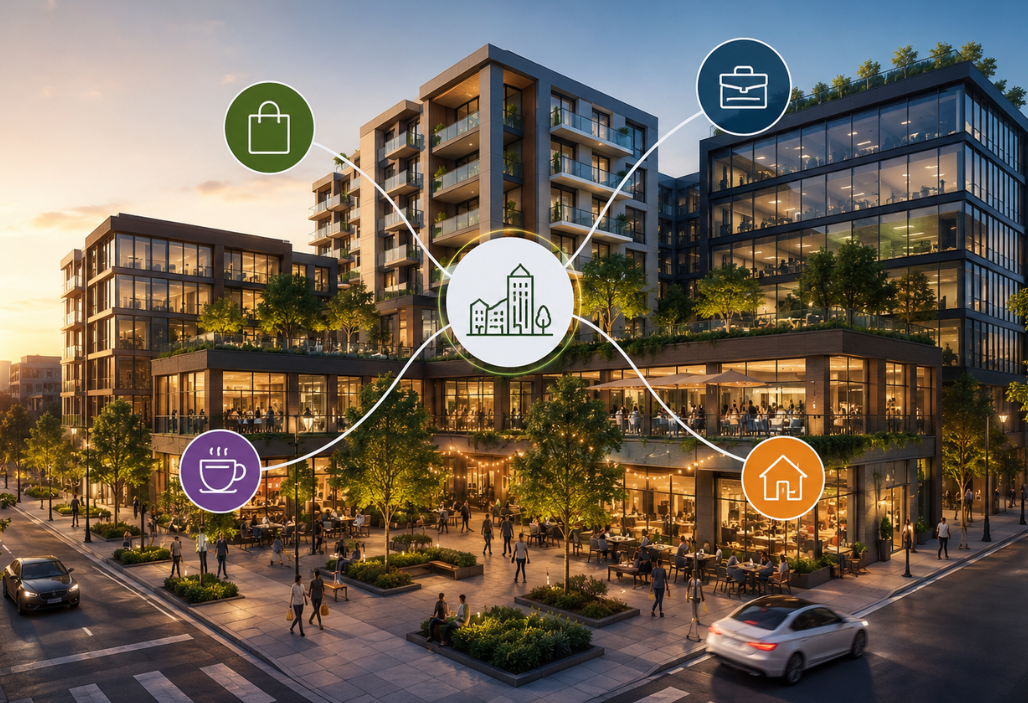
Mixed-use real estate developments are projects that combine multiple property functions within one location. Instead of separating residential neighborhoods from shopping centers, offices, and entertainment facilities, mixed-use communities bring these elements together in a carefully planned environment.
Examples include:
- Residential apartments above retail stores.
- Communities that include homes, schools, shopping centers, and office spaces.
- Developments with parks, recreational facilities, and business hubs within walking distance.
- Integrated urban centers designed to reduce commuting and improve convenience.
These projects create vibrant communities where people can live, work, shop, and socialize without traveling long distances.
Why Demand for Mixed-Use Developments Is Increasing.
Changing Consumer Preferences
Modern homebuyers and tenants increasingly value convenience. People want easy access to shopping centers, healthcare facilities, schools, restaurants, and workplaces.
Mixed-use developments offer a lifestyle where daily needs are available within the same community, reducing travel time and improving quality of life.
As a result, properties located within integrated developments often attract stronger demand than those in isolated locations.
Rapid Urbanization
Urban populations continue to grow, placing pressure on infrastructure and available land. Cities must maximize land use while accommodating housing and commercial needs.
Mixed-use developments provide an efficient solution by utilizing land strategically and creating self-sustaining communities. This approach supports smart urban planning and helps address growing demand for housing and business spaces.
Improved Work-Life Balance
The rise of remote work and flexible working arrangements has changed how people view property locations. Many individuals now prefer communities that offer residential, commercial, and recreational facilities within close proximity.
Mixed-use developments reduce commuting times and promote healthier lifestyles by encouraging walking, cycling, and community engagement.
Investment Benefits of Mixed-Use Real Estate.
Strong Property Appreciation
Properties within mixed-use developments often experience stronger appreciation due to their convenience and attractiveness. As demand grows, both residential and commercial spaces can benefit from increasing market values.
Investors who acquire land or property in these developments may enjoy substantial long-term capital gains.
Multiple Income Streams
Unlike traditional real estate projects that rely on a single revenue source, mixed-use developments can generate income from various property types.
Revenue opportunities may include:
- Residential rental income.
- Commercial lease agreements.
- Retail tenancy income.
- Office space rentals.
This diversification helps reduce investment risk while increasing overall profitability.
Greater Market Resilience
Real estate markets can experience fluctuations, but mixed-use developments often demonstrate stronger resilience because they serve multiple sectors simultaneously.
If demand softens in one area, such as office space, residential or retail demand may continue supporting overall project performance.
This balanced approach makes mixed-use developments attractive to both developers and investors seeking stable returns.
The Role of Infrastructure in Mixed-Use Development Growth.
Infrastructure remains one of the biggest drivers behind the success of mixed-use real estate projects.
Road networks, public transportation systems, water supply, electricity, internet connectivity, and social amenities significantly influence property demand and value.
Areas experiencing infrastructure upgrades often become ideal locations for future mixed-use developments. Investors who identify these emerging growth corridors early can position themselves ahead of market appreciation.
Sustainability and Future Growth.
Sustainability is becoming increasingly important in modern real estate planning. Mixed-use developments support environmental goals by reducing vehicle dependence, promoting efficient land use, and encouraging walkable communities.
Many new developments incorporate:
- Green spaces and parks.
- Energy-efficient buildings.
- Smart infrastructure systems.
- Sustainable water management solutions.
As governments and urban planners prioritize sustainable development, mixed-use projects are expected to play an even larger role in future real estate markets.
Why Investors Should Pay Attention.
For investors looking to build wealth through property, mixed-use developments represent one of the most promising opportunities in today’s market. These projects combine convenience, sustainability, economic activity, and strong demand drivers within a single investment environment.
Land located near planned mixed-use developments often experiences significant appreciation as construction progresses and communities become established. Early investors can benefit from both rising land values and expanding commercial activity.