

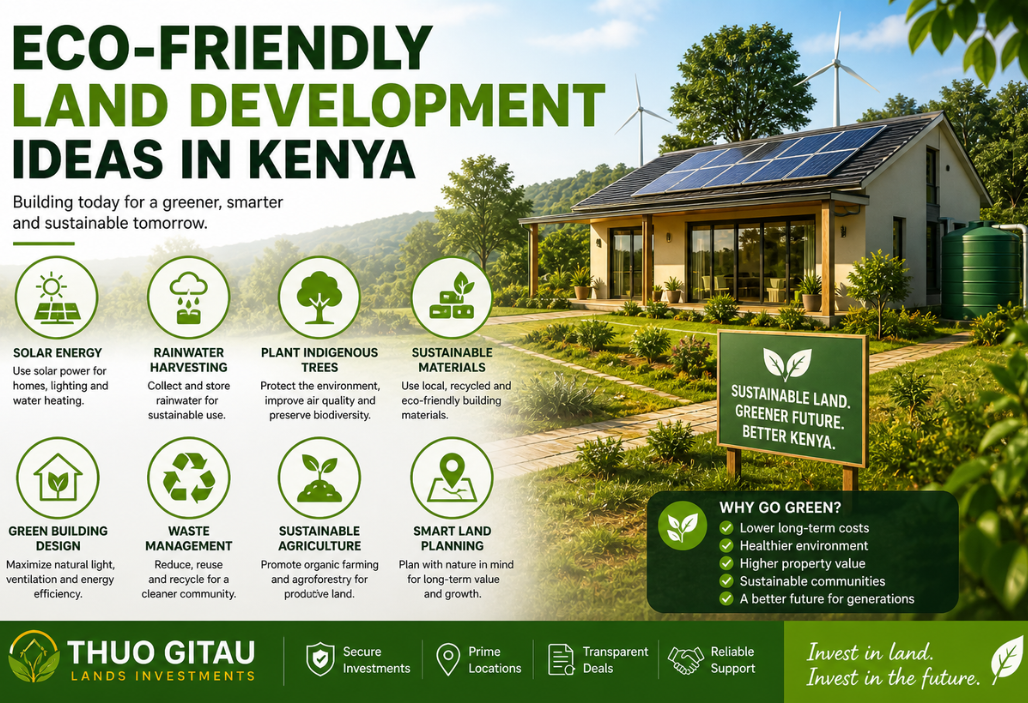
Eco-Friendly Land Development Ideas in Kenya.
As climate change and environmental degradation become more urgent global concerns, eco-friendly land development in Kenya is no longer optional it is essential. Today, smart investors and developers are embracing sustainable land use practices that not only protect the environment but also increase property value and long-term returns.
If you own land or are planning to invest, here are the best eco-friendly land development ideas in Kenya that combine sustainability, profitability, and modern living.
What Is Eco-Friendly Land Development?
Eco-friendly land development focuses on using natural resources responsibly while minimizing environmental impact. It integrates green building techniques, renewable energy, water conservation, and sustainable landscaping to create long-lasting and environmentally responsible projects.
In Kenya, this approach aligns with national goals like Vision 2030 and global sustainability standards, making it a future-proof investment strategy.
1. Invest in Solar Energy Systems.
Kenya enjoys abundant sunshine, making solar power one of the most effective sustainable energy solutions.
Eco-friendly developments now commonly include:
- Solar panels for electricity
- Solar water heating systems
- Solar street lighting
These systems reduce reliance on non-renewable energy and significantly cut long-term costs.
SEO Tip: “solar-powered homes Kenya” is a high-ranking keyword in real estate searches.
2. Implement Rainwater Harvesting and Water Conservation.
Water scarcity is a growing challenge in many parts of Kenya. Smart land development should include:
- Rainwater harvesting systems
- Greywater recycling
- Water-efficient plumbing
These systems reduce dependence on municipal water and support sustainable living.
Additionally, water-wise landscaping (using drought-resistant plants) helps conserve water while maintaining beautiful outdoor spaces.
3. Preserve Green Spaces and Plant Indigenous Trees.
One of the simplest but most powerful eco-friendly ideas is protecting and enhancing natural vegetation.
- Plant indigenous trees like acacia and grevillea
- Create eco-parks and green zones
- Maintain open spaces within developments
Projects like eco-villages in Kenya show that using native plants improves soil health and biodiversity while reducing maintenance costs.
4. Use Sustainable and Local Building Materials.
Construction materials play a major role in environmental impact.
Eco-friendly alternatives include:
- Recycled materials
- Locally sourced stone and timber
- Innovative materials like mycelium (fungi-based panels)
These materials reduce carbon emissions, waste, and transportation costs while supporting local industries.
5. Adopt Green Building Designs.
Modern eco-friendly homes are designed to be energy-efficient and environmentally responsive.
Key features include:
- Natural ventilation and lighting
- Smart insulation
- Energy-efficient appliances and lighting
Green building practices reduce energy consumption and create healthier living environments.
6. Implement Proper Waste Management Systems.
Sustainable land development should include:
- Waste segregation systems
- Recycling programs
- Composting for organic waste
Reducing landfill waste is a key pillar of sustainable real estate development in Kenya, helping create cleaner and healthier communities.
7. Integrate Sustainable Agriculture and Land Use.
Instead of leaving land idle, eco-friendly developers are incorporating:
- Organic farming
- Agroforestry
- Community gardens
This approach not only improves land productivity but also promotes food security and environmental conservation.
8. Smart Planning and Sustainable Infrastructure.
Eco-friendly development goes beyond individual plots it includes holistic planning.
Modern approaches focus on:
- Efficient land use
- Sustainable transport systems
- Integrated water and energy systems
Programs like Kenya’s sustainable urban planning initiatives emphasize balancing environmental, social, and economic factors in development.
Why Eco-Friendly Development Is a Smart Investment.
Many investors still think green development is expensive—but the reality is different.
Eco-friendly land development:
- Increases property value
- Attracts modern buyers and tenants
- Reduces long-term operational costs
- Enhances community appeal
In fact, sustainable properties are becoming more attractive due to rising environmental awareness and cost savings.
Challenges to Consider.
While eco-friendly development has many benefits, challenges include:
- Higher initial setup costs
- Limited awareness in some regions
- Need for skilled professionals
However, these challenges are rapidly decreasing as technology and awareness grow.
Conclusion: Build Smart, Build Green.
Eco-friendly land development in Kenya is not just a trend it is the future of real estate. By integrating renewable energy, water conservation, sustainable materials, and smart design, you can turn your land into a valuable, future-ready asset.