

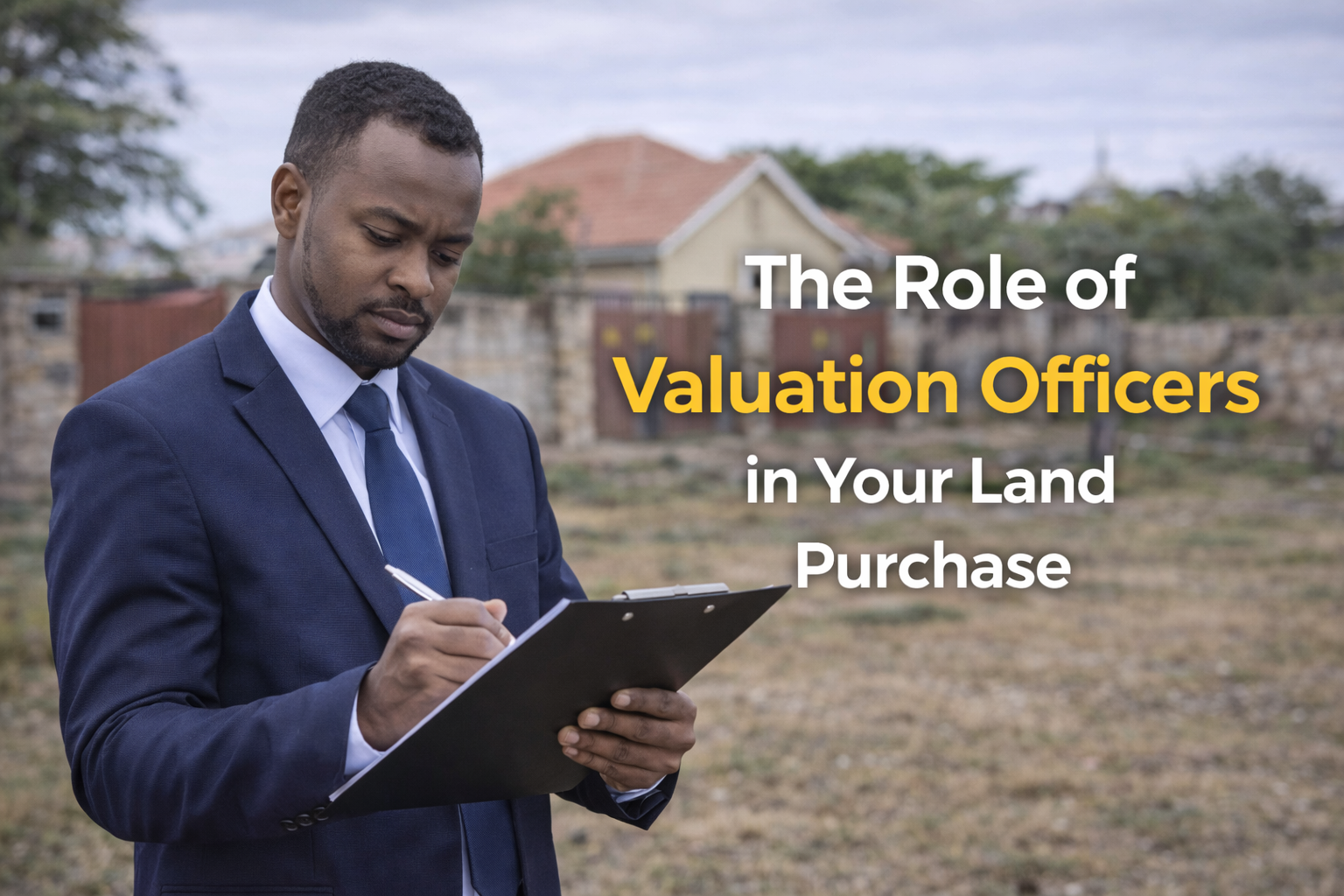
The Role of Valuation Officers in Your Land Purchase
Buying land in Kenya is an exciting milestone but it also comes with risks. One of the most overlooked yet critical professionals in any land transaction is the valuation officer. Whether you are buying for investment, development, or resale, a valuation officer helps you determine the true value of the property and avoid overpaying or making costly mistakes.
In this guide, we explore the role of valuation officers in land purchases, why they matter, and how they protect your investment.
1. Who Is a Valuation Officer?
A valuation officer (also known as a property valuer) is a trained professional licensed to assess the market value of land or property.
In Kenya, valuation officers are regulated by the Institution of Surveyors of Kenya (ISK) and must follow professional standards and ethics.
They provide an independent and objective opinion on how much a property is worth at a given time.
2. Why Valuation Matters in Land Transactions
Many buyers rely on asking prices or agent opinions but these can be misleading.
A valuation officer ensures that:
- You don’t overpay for land
- The price reflects current market conditions
- The property has real investment value
Without proper valuation, buyers risk purchasing overpriced or undervalued land.
3. Determining the True Market Value
The primary role of a valuation officer is to establish the market value of the land.
They consider factors such as:
- Location and accessibility
- Size and shape of the land
- Infrastructure (roads, water, electricity)
- Zoning and land use regulations
- Comparable sales in the area
This process is known as comparative market analysis, and it ensures the price is realistic and fair.
4. Supporting Loan and Mortgage Applications
If you are financing your land purchase through a bank or SACCO, valuation is mandatory.
Financial institutions require a valuation report to:
- Confirm the land’s value
- Determine how much they can lend
- Reduce lending risk
Without a valuation report, most lenders will not approve financing.
5. Identifying Risks and Red Flags
Valuation officers do more than just assign a price. They also help identify potential risks.
They may highlight issues such as:
- Land located in restricted zones
- Poor soil conditions
- Flood-prone or riparian areas
- Overstated land size
- Lack of infrastructure
This helps buyers make informed decisions before committing.
6. Assisting in Negotiation
A valuation report gives you strong bargaining power.
If the asking price is higher than the valuation:
- You can negotiate a lower price
- Avoid emotional or impulsive buying
- Make data-driven decisions
This can save you a significant amount of money.
7. Ensuring Compliance with Legal Requirements
Valuation officers ensure that the property aligns with:
- Zoning regulations
- Land use policies
- Development guidelines
This is especially important if you plan to:
- Build residential homes
- Develop commercial property
- Subdivide land
Failure to comply with regulations can lead to legal issues or project delays.
8. Supporting Tax and Stamp Duty Assessment
In Kenya, stamp duty is calculated based on the property’s value.
The government may rely on valuation reports to:
- Confirm the declared value
- Prevent under-declaration
- Ensure correct tax payment
A professional valuation helps you avoid disputes with tax authorities.
9. Providing Documentation for Future Use
A valuation report is a valuable document that can be used for:
- Resale of the land
- Insurance purposes
- Financial planning
- Investment analysis
It provides a clear record of the property’s worth at the time of purchase.
10. When Should You Hire a Valuation Officer?
You should involve a valuation officer:
- Before purchasing land
- When applying for a loan
- Before selling property
- When planning development
Early involvement ensures better decision-making and reduces risks.
Conclusion
A valuation officer plays a critical role in any land transaction by ensuring that you:
- Pay the right price
- Understand the property’s true value
- Identify potential risks
- Meet legal and financial requirements
In a market where land fraud and overpricing are common, professional valuation is not a luxury, it is a necessity.
Before you buy land, always invest in a qualified valuation officer. It’s a small cost that can save you from major financial losses and help you make smarter, more secure investment decisions.