

Red Soil vs Black Cotton Soil: Construction Cost Implications
When buying land in Kenya, many investors focus on location, price, and accessibility but overlook one critical factor: soil type. The type of soil on your land directly affects construction costs, foundation design, drainage, and long-term building stability.
Two of the most common soil types in Kenya are red soil and black cotton soil. Understanding their differences can save you hundreds of thousands or even millions of shillings in construction costs.
This guide explains the cost implications of building on red soil vs black cotton soil, helping you make smarter land investment decisions.
1. What Is Red Soil?
Red soil is commonly found in areas such as:
- Kiambu
- Murang’a
- Parts of Machakos
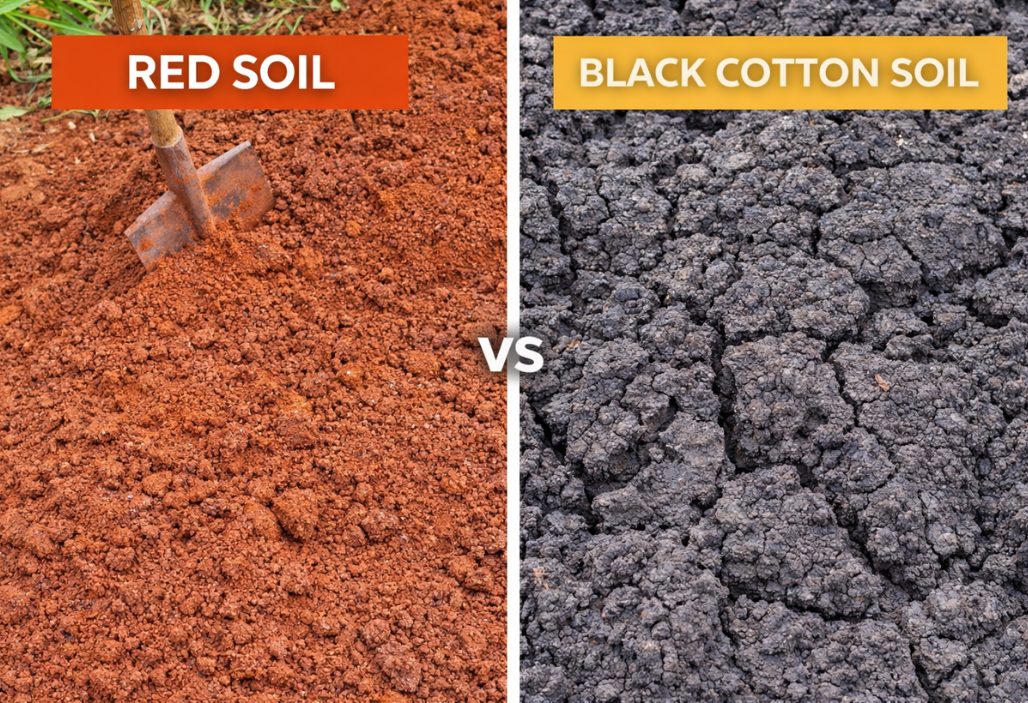
It is well-drained, firm, and stable, making it one of the most preferred soils for construction.
Key Characteristics:
- Good drainage
- High bearing capacity
- Minimal expansion and contraction
- Easy to compact
Because of these properties, red soil is considered ideal for building foundations.
2. What Is Black Cotton Soil?
Black cotton soil is common in areas like:
- Kitengela
- Kajiado
- Athi River
- Some parts of Eastern Kenya
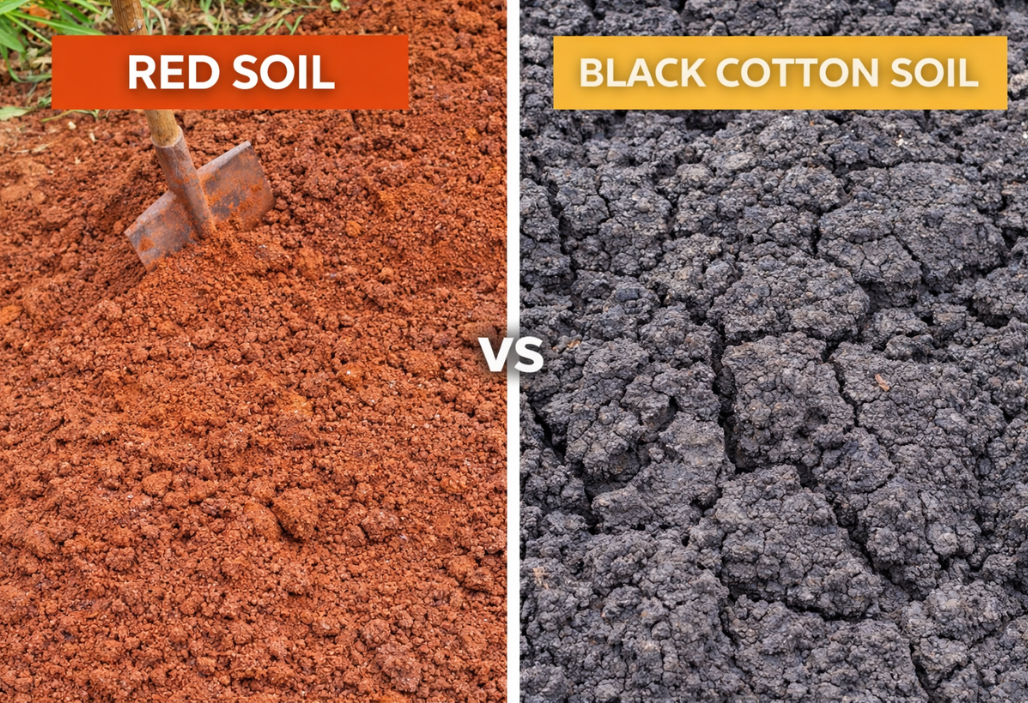
It is a clay-heavy soil known for its expansion and shrinkage depending on moisture levels.
Key Characteristics:
- Expands when wet
- Shrinks and cracks when dry
- Poor drainage
- Low stability
This makes it one of the most challenging soil types for construction.
3. Foundation Costs: The Biggest Difference
Red Soil:
- Requires standard strip or raft foundation
- Minimal excavation
- Lower labor and material costs
Black Cotton Soil:
- Requires special foundation designs such as:
- Deep strip foundations
- Raft foundations
- Pile foundations in extreme cases
- Excavation must go deeper to reach stable ground
- Additional materials like hardcore and murram are required
Cost Impact:
Building on black cotton soil can increase foundation costs by 30% to 100% or more compared to red soil.
4. Excavation and Site Preparation Costs
Red Soil:
- Easy to excavate
- Minimal soil replacement
- Lower machinery costs
Black Cotton Soil:
- Requires removal of expansive soil
- Replacement with stable material (murram or gravel)
- Heavy machinery often needed
Cost Impact:
Site preparation alone can cost KES 150,000–500,000+ extra, depending on plot size.
5. Drainage and Moisture Control
Red Soil:
- Naturally well-drained
- Less need for drainage systems
Black Cotton Soil:
- Retains water
- Requires proper drainage systems such as:
- French drains
- Surface drainage channels
- Moisture barriers
Cost Impact:
Additional drainage systems increase both construction and maintenance costs.
6. Structural Stability and Maintenance
Red Soil:
- Stable over time
- Minimal risk of cracks
- Lower maintenance costs
Black Cotton Soil:
- Movement causes:
- Cracked walls
- Uneven floors
- Structural damage
Long-Term Cost:
Frequent repairs and maintenance can significantly increase the lifetime cost of the building.
7. Construction Time
Red Soil:
- Faster construction
- Fewer complications
Black Cotton Soil:
- Slower construction due to:
- Soil treatment
- Foundation reinforcement
- Weather sensitivity
Cost Impact:
Longer timelines increase labor costs and project delays.
8. Land Price vs Construction Cost Trade-Off
Interestingly, land with black cotton soil is often cheaper than land with red soil.
Why?
- Higher construction costs
- Lower demand from developers
However, the lower land price can be misleading.
Example:
- Red soil plot: KES 800,000
- Black cotton plot: KES 500,000
You may save KES 300,000 on purchase but spend KES 500,000–1,000,000 extra on construction.
9. When Does Black Cotton Soil Make Sense?
Despite the challenges, black cotton soil can still be viable if:
- You budget properly
- You use professional engineers
- You plan for soil stabilization
It may be suitable for:
- Large-scale developments
- Long-term investment projects
- Commercial properties with proper design
10. Tips for Buyers and Developers
Before buying land, always:
- Conduct a soil test (geotechnical survey)
- Ask about soil type in the area
- Factor construction costs not just land price
- Work with qualified engineers and contractors
This helps you avoid unexpected expenses.
Conclusion
When it comes to construction, soil type is just as important as location.
- Red soil offers lower construction costs, faster building, and long-term stability
- Black cotton soil requires higher investment in foundations, drainage, and maintenance
While black cotton land may seem cheaper upfront, the hidden construction costs can make it more expensive in the long run.
For smart investors, the key is not just buying land but understanding what lies beneath it.