

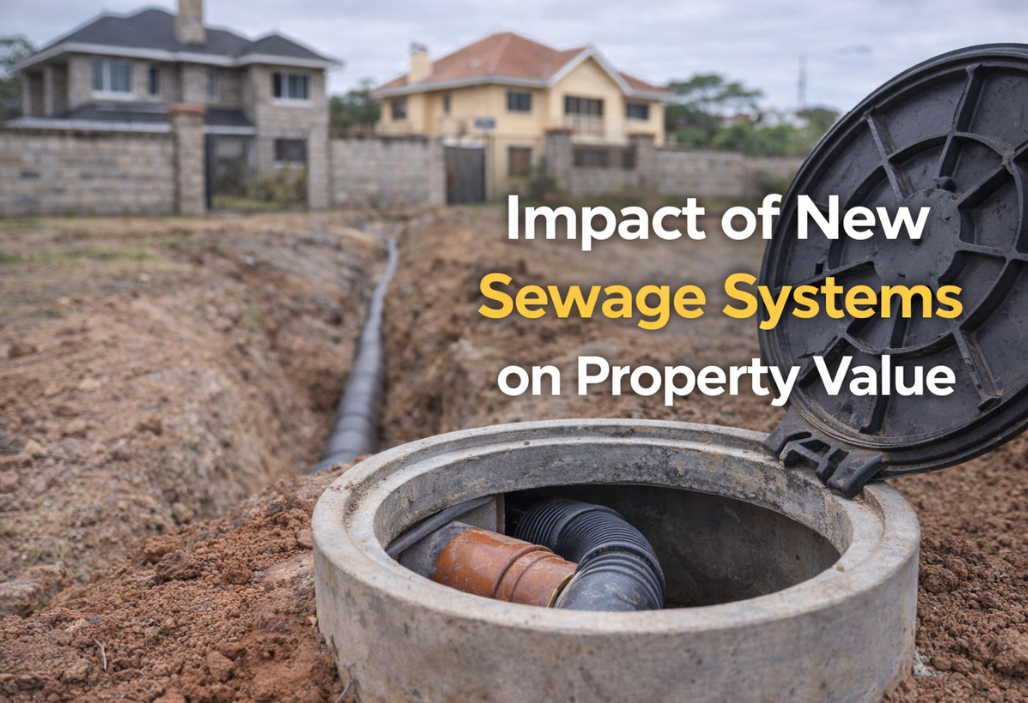
The Impact of New Sewage Systems on Property Value
Infrastructure is one of the biggest drivers of real estate value and among the most overlooked is sewage and sanitation systems. While roads and electricity often get more attention, modern sewage systems play a crucial role in determining whether land is considered livable, developable, and valuable.
In Kenya and globally, areas with improved sewer infrastructure are experiencing rising property values, while poorly planned or badly located sewage systems can sometimes have the opposite effect.
This guide explores the real impact of new sewage systems on property value, helping land buyers and investors make informed decisions.
1. Sewage Systems as Critical Infrastructure
A sewage system is more than just waste management, it is a public health and urban development backbone.
Modern sewer systems:
- Improve sanitation and hygiene
- Reduce environmental pollution
- Support high-density developments
- Enable urban expansion
Research shows that access to basic infrastructure like water and sanitation significantly increases the attractiveness and value of property in a given area.
2. Positive Impact: Increased Property Value
1. Improved Living Conditions
Areas connected to modern sewage systems are cleaner, healthier, and more organized.
This leads to:
- Higher demand from buyers and tenants
- Increased rental yields
- Stronger long-term appreciation
Properties in well-serviced neighborhoods are generally more desirable and command higher prices.
2. Enabling Real Estate Development
Without proper sewage systems, certain developments are impossible or restricted.
Sewer infrastructure allows:
- Apartment construction
- Commercial buildings
- Mixed-use developments
This increases land usability and unlocks higher-value developments, boosting overall land prices.
3. Higher Investor Confidence
Investors prefer areas with reliable infrastructure because:
- Risks are lower
- Development is easier
- Returns are more predictable
Infrastructure development, including sewer systems, is widely recognized as a key driver of rising property values.
4. Shift from Septic to Sewer Systems
In many areas, transitioning from septic tanks to centralized sewer systems increases value because:
- Maintenance costs are lower
- Land use efficiency improves
- Environmental risks reduce
This makes properties more attractive to both homeowners and developers.
3. Negative Impact: When Sewage Systems Reduce Value
While sewage systems generally increase value, poor planning or proximity issues can have negative effects.
1. Proximity to Sewage Treatment Plants
Properties located very close to sewage treatment plants may experience:
- Odor issues
- Noise pollution
- Reduced aesthetic appeal
Studies show that proximity to sewage plants can lead to declines in property values, especially where odor emissions are noticeable.
2. Environmental and Health Concerns
Poorly maintained sewer systems can cause:
- Overflows and contamination
- Flooding risks
- Health hazards
Such risks reduce buyer confidence and property desirability. Sewer system health is directly linked to property value because it affects perceived investment risk.
3. Easements and Land Use Restrictions
Sewer lines often come with wayleaves or easements, which can:
- Limit where you can build
- Reduce usable land size
- Affect design flexibility
This can slightly reduce land value, especially for smaller plots.
4. The Balance: Location Matters
The impact of sewage infrastructure largely depends on location and design.
Positive Scenarios:
- Land connected to sewer but far from treatment plants
- Well-maintained underground systems
- Planned urban developments
Negative Scenarios:
- Land next to open sewage systems
- Poorly maintained infrastructure
- Properties too close to treatment plants
In modern developments, underground and well-managed systems minimize negative impacts and maximize value.
5. Impact on Land Value in Emerging Areas
In fast-growing areas around Nairobi and other towns:
- Introduction of sewer systems often triggers rapid land price increases
- Developers move in quickly
- Demand rises due to improved livability
Just like roads and electricity, sewer infrastructure acts as a growth catalyst.
6. Long-Term Investment Perspective
For long-term investors, sewage systems are a strong positive indicator.
They signal:
- Government investment
- Urban expansion
- Future population growth
This often leads to consistent appreciation over time.
7. What Land Buyers Should Check
Before buying land, always confirm:
- Is the area connected to a sewer system?
- How far is the nearest treatment plant?
- Are there any sewer easements on the land?
- Is the system modern and well-maintained?
These factors can significantly affect both value and usability.
Conclusion
New sewage systems have a powerful impact on property value mostly positive, but sometimes negative depending on proximity and quality.
Key Takeaways:
- Proper sewage systems increase land value and demand
- They enable high-density and high-value developments
- Poorly located or maintained systems can reduce property value
- Proximity to treatment plants may affect desirability
For smart investors, the goal is simple:
Buy land with access to modern sewage infrastructure but not too close to the source.
Understanding this balance can help you identify high-growth areas and avoid hidden risks in real estate investment.