

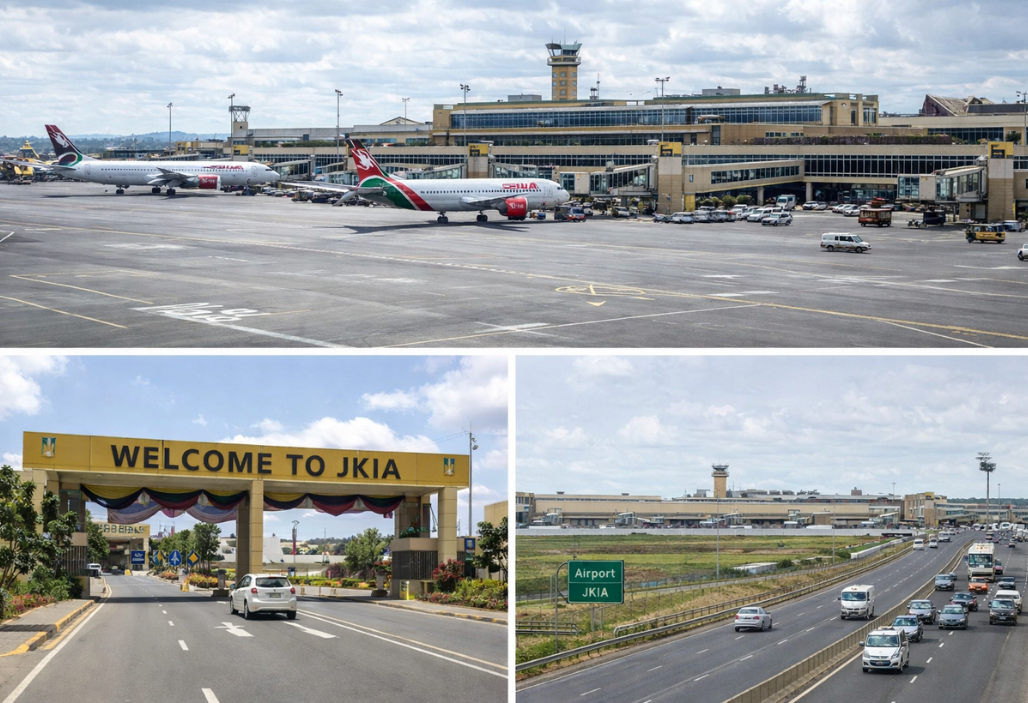
Why Land Near Airports (JKIA/Wilson) Is Primed for Logistics Hubs
The demand for strategically located land in Nairobi is rapidly increasing, especially around major transport nodes like airports. Areas surrounding Jomo Kenyatta International Airport (JKIA) and Wilson Airport are emerging as prime locations for logistics hubs, warehouses, and industrial parks.
As Kenya positions itself as a regional trade and logistics powerhouse, land near these airports is becoming one of the most valuable real estate assets. But what exactly is driving this trend?
1. Strategic Position as East Africa’s Air Cargo Gateway
JKIA is the largest and busiest airport in East and Central Africa, serving as a key gateway for international trade.
It handles a significant share of Kenya’s air cargo, accounting for over 95% of the country’s cargo traffic.
This makes areas around JKIA ideal for:
- Freight forwarding companies
- Export businesses (flowers, fresh produce, pharmaceuticals)
- International logistics firms
With such high cargo volumes, proximity to the airport reduces transit time and operational costs making nearby land extremely valuable.
2. Growing Air Cargo Demand and Trade Expansion
Kenya’s air cargo sector has shown consistent growth, driven by exports and regional trade. JKIA alone handles hundreds of thousands of tonnes of cargo annually, with steady growth projections.
Additionally, global trade agreements like the African Continental Free Trade Area (AfCFTA) are expected to increase intra-African freight demand significantly.
This growth is fueling demand for:
- Warehousing facilities
- Cold storage units
- Distribution centers
Investors are therefore acquiring land near airports to capitalize on this expanding logistics ecosystem.
3. Presence of Specialized Cargo Infrastructure
JKIA already hosts extensive cargo infrastructure, including:
- Dedicated cargo terminals
- Cold storage facilities
- Freight handling companies
The airport has a specialized cargo terminal and multiple logistics service providers operating within its vicinity.
Similarly, Wilson Airport supports regional cargo operations and charter logistics services, making it a vital hub for domestic and regional distribution.
This existing infrastructure attracts more businesses, creating a cluster effect that drives up land demand and prices.
4. Proximity to Nairobi’s Industrial and Commercial Zones
Both JKIA and Wilson Airport are strategically located near key economic zones in Nairobi:
- Industrial Area
- Embakasi logistics corridor
- Nairobi CBD
This proximity allows businesses to seamlessly integrate air transport with:
- Road transport (trucks and highways)
- Rail transport (SGR connections)
As a result, companies prefer setting up logistics hubs close to airports to streamline their supply chains.
5. Government and International Interest in Logistics Hubs
There are ongoing plans to transform JKIA into a major logistics and humanitarian hub. For instance, the United Nations has explored establishing a humanitarian logistics hub at JKIA to serve Africa and beyond.
Such developments signal:
- Increased international investment
- Expansion of logistics infrastructure
- Long-term economic growth
These factors significantly boost investor confidence and drive land speculation in surrounding areas.
6. Faster Delivery and Reduced Operational Costs
Location is everything in logistics. Businesses operating near airports benefit from:
- Faster turnaround times
- Reduced transportation costs
- Efficient import/export processes
For industries dealing with perishable goods like flowers and fresh produce, proximity to JKIA is especially critical.
This efficiency advantage makes airport-adjacent land highly sought after by logistics companies.
7. Urban Expansion and Infrastructure Development
As Nairobi continues to expand, areas around JKIA and Wilson Airport are undergoing rapid urbanization. Infrastructure improvements such as:
- Road expansions
- Bypass developments
- Industrial parks
are increasing accessibility and land value.
JKIA itself is undergoing expansion discussions to accommodate growing passenger and cargo demand, further enhancing its role as a logistics hub.
8. Limited Supply of Strategic Land
Land near airports is finite, and as demand grows, supply becomes increasingly scarce. This scarcity drives:
- Rapid price appreciation
- Increased competition among investors
- Higher returns on investment
Early investors in areas like Embakasi, Syokimau, and Lang’ata are already seeing significant value appreciation.
Benefits of Investing in Land Near Airports
- High demand from logistics companies
- Strong capital appreciation
- Potential for commercial and industrial development
- Strategic long-term investment
Risks to Consider
- High entry costs due to rising prices
- Zoning and regulatory restrictions
- Noise and environmental factors
- Market speculation
Conclusion
Land near JKIA and Wilson Airport is no longer just residential or idle property—it is becoming the backbone of Kenya’s logistics and supply chain infrastructure.
With increasing cargo volumes, government-backed projects, and growing international trade, these areas are primed for logistics hubs. For investors, this presents a rare opportunity to tap into a high-growth sector where infrastructure meets real estate value.
As Kenya continues to position itself as a regional trade gateway, investing in land near airports could prove to be one of the smartest real estate decisions in the coming decade.