

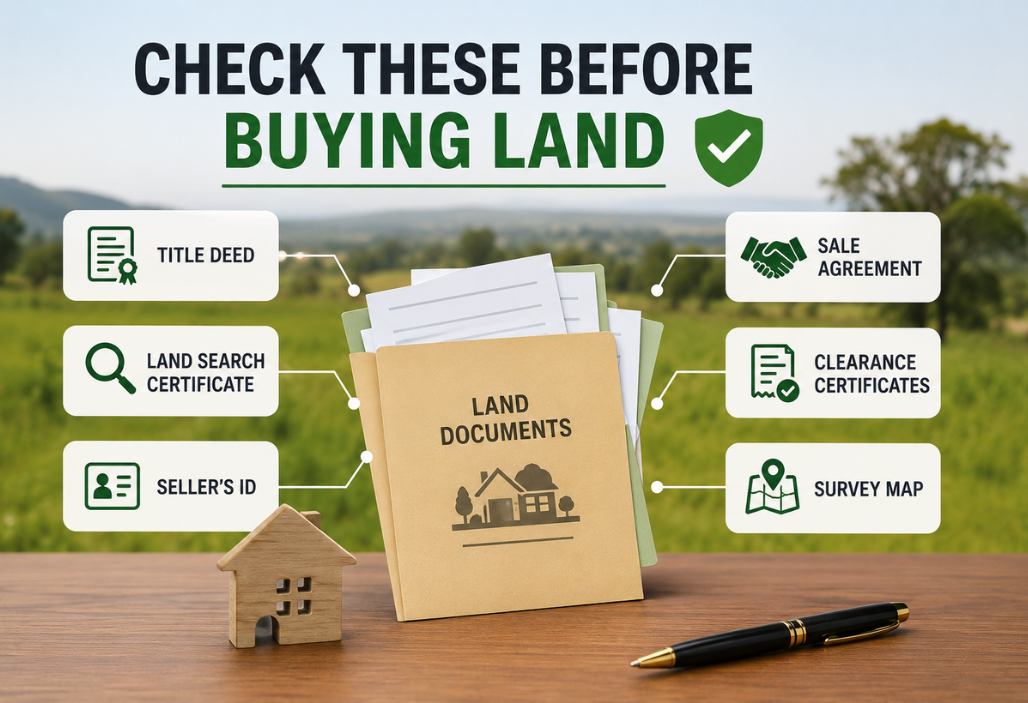
What Documents Should You Check Before Buying Land?
Buying land is one of the biggest investments you can make, but it can also become one of the riskiest if proper due diligence is ignored. In Kenya, cases of fake title deeds, double allocation, boundary disputes, and fraudulent sellers continue to affect many buyers every year. That is why checking the right documents before purchasing land is absolutely essential.
Whether you are buying land for residential development, farming, commercial purposes, or long-term investment, verifying legal documents protects your money and gives you peace of mind.
1. Title Deed
The title deed is the most important document in any land transaction because it proves ownership of the property. Before making any payment, request the original title deed from the seller and carefully examine it.
You should confirm:
- The seller’s name matches the title deed
- The land reference number is correct
- The acreage and location match the physical land
- There are no signs of forgery or alteration
Experts strongly recommend conducting an official land search at the Ministry of Lands or through the Ardhisasa platform to confirm the title is genuine.
2. Land Search Certificate
A land search certificate is an official document from the Lands Registry that confirms:
- The registered owner
- Any caveats or restrictions
- Existing loans or charges
- Court disputes involving the property
This document is critical because a title deed alone may not reveal hidden legal problems. A land search helps verify whether the land is legally transferable and free from disputes.
According to property experts, skipping a land search is one of the most common mistakes buyers make in Kenya.
3. National ID and KRA PIN of the Seller
Always verify the seller’s identity documents before signing any agreement. Request:
- A copy of their National ID
- KRA PIN certificate
- Passport photos where necessary
The names on these documents must match the title deed and land search records exactly. If the seller is acting on behalf of someone else, request legal authority documents such as a Power of Attorney.
If the land belongs to a deceased person, ensure succession has been completed legally before proceeding.
4. Sale Agreement
A sale agreement is a legally binding document prepared by a qualified advocate outlining the terms of the transaction. It protects both the buyer and the seller during the transfer process.
The agreement should include:
- Purchase price
- Payment terms
- Land details
- Obligations of both parties
- Transfer timelines
Never rely on handwritten agreements or informal receipts when buying land.
5. Land Rates Clearance Certificate
This document confirms that the landowner has paid all county land rates. Unpaid rates can become the buyer’s responsibility after purchase.
You can obtain this certificate from the county government offices. It is especially important for leasehold properties and urban land.
6. Land Rent Clearance Certificate
For leasehold land, the Ministry of Lands requires confirmation that all annual land rent payments are cleared before ownership transfer.
Failure to verify this document can delay title transfer and create legal complications.
7. Survey Maps and Mutation Forms
Survey maps help confirm the exact location, boundaries, and dimensions of the land. Buyers should also verify whether the land sits on:
- Road reserves
- Riparian land
- Public utility land
- Government land
A licensed surveyor can help confirm beacons and boundaries physically on-site.
If the land is a subdivision, request the mutation form to confirm the subdivision was legally approved and registered.
8. Land Control Board Consent
Agricultural land transactions in Kenya often require approval from the Land Control Board (LCB). Without this consent, the transaction may be considered invalid.
Always confirm whether the land falls under areas requiring LCB approval before purchase.
9. Transfer Documents
Before the transaction is finalized, ensure all transfer forms are properly signed and witnessed by advocates. These documents are required to officially transfer ownership into your name.
Incomplete or improperly executed transfer documents can delay registration or create future ownership disputes.
10. Physical Site Visit Reports
Documents alone are not enough. Always conduct a physical site visit before buying land. Speak to neighbors, verify access roads, inspect boundaries, and confirm the land matches the documents provided.
Many property disputes are discovered only during physical inspections.