

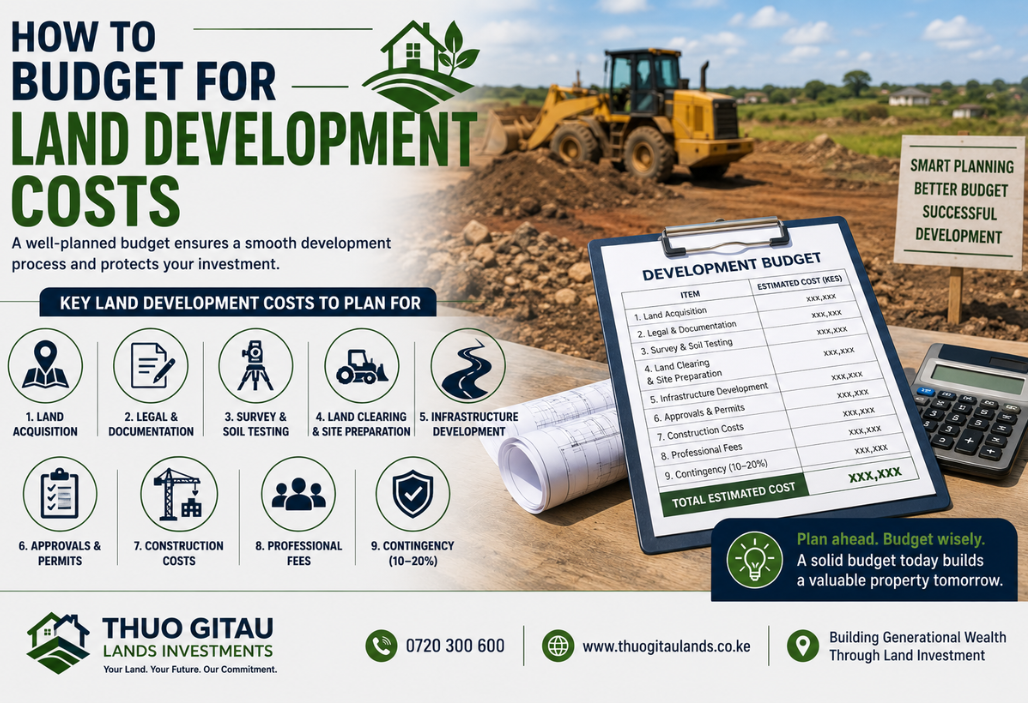
How to Budget for Land Development Costs.
A Complete Guide for Smart Land Investors.
Buying land is often the first step toward achieving your real estate goals. However, many investors focus solely on the purchase price and overlook the additional expenses required to make the property usable and profitable. Whether you’re planning to build a home, develop commercial property, or hold land for future appreciation, understanding land development costs is crucial for successful project planning.
Creating a realistic budget helps prevent financial surprises, keeps projects on schedule, and maximizes return on investment. In this guide, we’ll explore the key expenses involved in land development and how to budget effectively.
Why Budgeting for Land Development Matters.
Many first-time investors assume that once they purchase a plot, construction can begin immediately. In reality, most land requires preparation, approvals, infrastructure, and professional services before development starts.
Proper budgeting helps you:
- Avoid unexpected expenses
- Improve project planning
- Secure adequate financing
- Increase profitability
- Reduce investment risks
- Complete developments on time
A comprehensive budget provides a clear picture of the total investment required from acquisition to completion.
1. Land Acquisition Costs
The first component of your budget is the land purchase itself. Beyond the purchase price, investors should also account for:
- Legal fees
- Land search fees
- Valuation costs
- Stamp duty
- Registration charges
- Survey fees
These transaction costs can add a significant percentage to the overall investment and should never be overlooked.
2. Site Survey and Soil Testing
Before construction begins, it’s essential to understand the physical characteristics of the land.
Professional assessments may include:
- Boundary surveys
- Topographical surveys
- Soil testing
- Geotechnical investigations
These evaluations help determine land suitability, identify potential challenges, and guide foundation design. Investing in proper site analysis can prevent costly construction issues later.
3. Land Clearing and Site Preparation
Most undeveloped land requires preparation before building can commence.
Common site preparation costs include:
- Vegetation removal
- Tree cutting
- Demolition of existing structures
- Earthworks
- Grading and leveling
- Excavation
The amount required depends on the terrain, size of the property, and existing site conditions.
4. Infrastructure Development Costs
Infrastructure is often one of the largest components of land development expenses.
Depending on the project, costs may include:
- Access roads
- Internal roads
- Drainage systems
- Water connections
- Electricity installation
- Sewer systems
- Internet and communication services
Properties located in rapidly growing areas may require significant infrastructure investment before development becomes viable.
5. Regulatory and Approval Fees
Every development project must comply with local planning and building regulations.
Budget for:
- Development permits
- Building approvals
- Environmental assessments
- Change-of-user applications
- Inspection fees
- Compliance certifications
Failure to account for these expenses can delay projects and increase costs significantly.
6. Construction Costs
Construction usually represents the largest portion of the development budget.
Factors influencing construction costs include:
- Building design
- Material prices
- Labor rates
- Foundation requirements
- Architectural complexity
- Project size
Obtaining multiple contractor quotations can help investors develop a more accurate construction budget.
7. Professional Service Fees
Successful developments require input from qualified professionals.
These may include:
- Architects
- Engineers
- Quantity surveyors
- Project managers
- Surveyors
- Legal advisors
While some investors try to minimize professional fees, expert guidance often prevents costly mistakes and improves project outcomes.
8. Contingency Fund
Unexpected expenses are common in property development. Material price increases, weather delays, design modifications, and unforeseen site conditions can quickly affect your budget.
Industry experts typically recommend allocating between 10% and 20% of the total project cost as a contingency reserve.
A contingency fund provides financial flexibility and protects the project from disruptions.
Tips for Accurate Land Development Budgeting.
Conduct Thorough Due Diligence
Research zoning regulations, utility availability, environmental conditions, and future infrastructure plans before purchasing land.
Get Professional Estimates
Seek quotations from contractors, surveyors, engineers, and consultants early in the planning process.
Consider Future Maintenance Costs
Infrastructure such as roads, drainage systems, and utilities may require ongoing maintenance expenses.
Review Market Trends
Construction material and labor costs fluctuate over time. Monitoring market conditions helps improve budget accuracy.