

Why the ‘Blue Economy’ Is Making Coastal Land in Diani More Attractive (2026)
The Blue Economy is rapidly emerging as a major driver of economic growth in Kenya and nowhere is this more evident than along the coastline in Diani, Kwale County. Traditionally known for its breathtaking beaches and tourism appeal, Diani is now benefiting from strategic government and private sector investments aimed at unlocking the economic potential of marine and coastal resources. This shift is making coastal land in Diani more attractive than ever for investors looking for long-term value, rental income, and lifestyle opportunities.
What Is the Blue Economy?
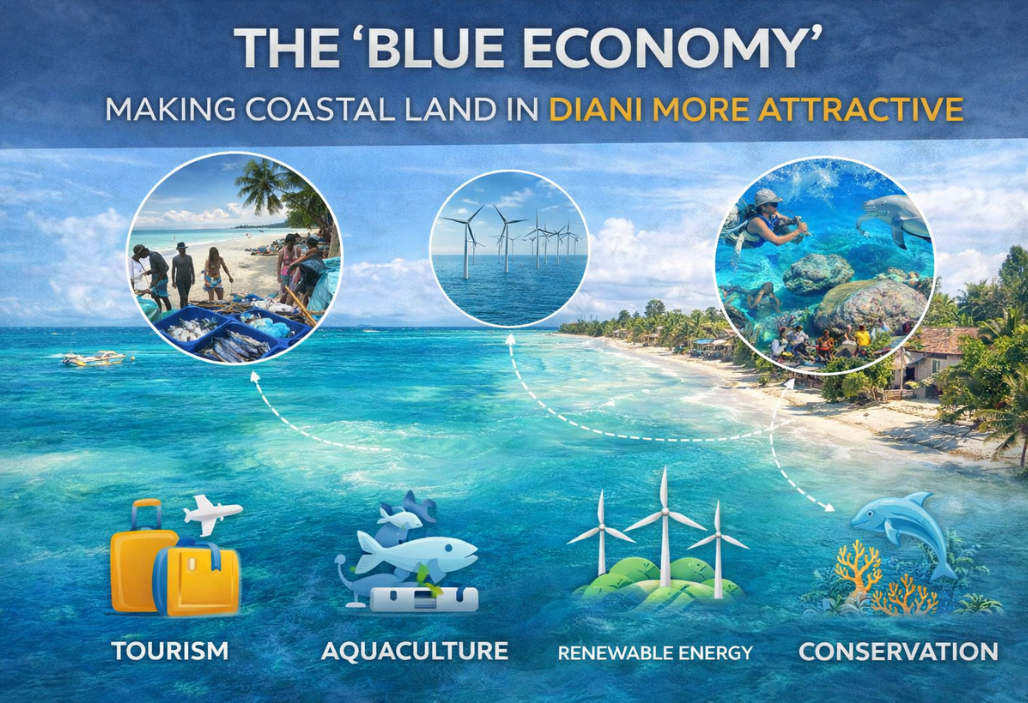
At its core, the Blue Economy refers to the sustainable use of ocean and coastal resources for economic growth, improved livelihoods, job creation and environmental conservation. It goes beyond traditional marine industries like fishing to include tourism, aquaculture, maritime transport, renewable energy, marine biotechnology, and ecosystem services.
For Kenya, whose coastline stretches about 640 km along the Indian Ocean, the Blue Economy is crucial. It’s seen as an emerging sector that could significantly boost GDP, create jobs, and attract international investment.
Diani Beach: A Prime Coastal Hub
Situated about 30 km south of Mombasa, Diani Beach is one of Kenya’s most spectacular coastal destinations. Its 17 km stretch of white sand, clear Indian Ocean waters, and vibrant tourism sector already make it a top vacation spot for both local and international travelers.
But beyond sun, sand, and sea, Diani is increasingly seen as a strategic Blue Economy hotspot activating not just leisure tourism but marine or ocean-linked economic opportunities.
Blue Economy Initiatives Strengthening Diani’s Appeal
Government & International Investments
The Kenyan government, working with international partners like the European Union (EU), has poured billions into Blue Economy projects in coastal regions including fisheries, aquaculture, maritime services, beach facility upgrades, and infrastructure.
In Kwale County, where Diani is located, major investments include:
- Development of fish landing sites and small ports
- Construction of markets, housing projects, and industrial parks
- Infrastructure upgrades (electrification, road improvements) to connect coastal towns
All of which boost economic activity and consumer demand.
Additionally, multi-year programmes like Go Blue are strengthening inclusive coastal economic growth, integrating sustainable marine conservation with vibrant business opportunities.
How the Blue Economy Drives Land Value in Diani
1. Expanding Marine & Coastal Tourism
Diani is at the epicenter of projects promoting sustainable and eco-friendly tourism, part of the Blue Economy’s core goals. Community-based eco-tourism ventures and marine conservation tourism initiatives in and around Diani and Shimoni are elevating visitor experiences, expanding local incomes, and increasing demand for short-stay accommodation and holiday homes.
This broader Blue Tourism push means more tourists, higher occupancy rates, and generally stronger returns for property owners and land investors in coastal zones.
2. Diversified Economic Use Cases for Land
Coastal land in Diani no longer appeals only for traditional beach resorts. It’s becoming valuable for a range of Blue Economy-related ventures, including:
- Boutique eco-lodges and villas
- Maritime tourism hubs
- Aquaculture facilities
- Marine research and education centres
- Renewable energy installations
This diversity of potential uses makes land in coastal areas more attractive and resilient to market shifts, compared with land tied solely to conventional tourism.
3. Increased Investment Confidence & Economic Growth
International investment forums such as Blue Invest Africa hosted in Diani are putting the Kenyan coast on the global Blue Economy map. These events draw investors from Europe, Africa, and beyond, showcasing marine biotechnology, coastal tourism, logistics, and marine spatial planning opportunities that directly impact land value.
With these developments, coastal land is no longer seen as a static asset but as a dynamic investment gateway into a multi-sector economic future.
4. Sustainable & Inclusive Development
Blue Economy planning includes marine spatial planning that seeks to balance economic use with ecosystem protection, key for long-term attraction of environmentally conscious investors.
Investors increasingly prefer coastal land projects that align with sustainable practices such as seaweed aquaculture, marine conservation tourism, and low-impact waterfront development because these attract premium visitors and reduce regulatory risk.
Why Coastal Land Is Strategic for Investors Now
- Tourism + Marine Growth: With Diani already one of East Africa’s leading tourist enclaves, Blue Economy diversification expands visitor segments beyond beachgoers to include eco- and water-based tourists.
- Infrastructure Upgrades: Road, port, and utility investments support property development and accessibility.
- Policy Support: Government policies increasingly emphasise sustainable use of marine resources, ensuring long-term economic viability.
- Job Growth & Income: The Blue Economy’s expansion in fisheries, aquaculture, and renewable energy opens additional economic pathways for local communities, bolstering real estate demand.
Risks to Consider
Despite strong fundamentals, prospective investors must assess:
- Environmental Regulations: Coastal development is regulated to protect marine ecosystems.
- Land Use Planning: Confirm zoning and approvals before buying.
- Climate & Erosion Risks: Coastal zones face climate change impact risks.
Due diligence is essential to ensure sustainable returns.
Conclusion: Blue Economy = Coastal Land Boom in Diani
In 2026, the Blue Economy is not just an abstract concept, it’s a real driver of economic transformation on Kenya’s coast. For Diani, with its world-class beaches, growing marine tourism initiatives, and supportive Blue Economy investments, coastal land is becoming a high-demand, high-value investment asset.
Investors seeking coastal property should consider:
✔ Land near marine tourism corridors
✔ Areas with eco-tourism and aquaculture potential
✔ Waterfront plots with beach and ocean access
✔ Properties aligned with sustainable development principles
As marine and coastal economic planning continues to evolve, land in Diani stands out as a strategic entry into one of Kenya’s most promising real estate frontiers blending natural beauty, economic diversification, and long-term growth potential.
Tip: Always verify land title, zoning, and environmental compliance before purchasing coastal property especially in Blue Economy priority zones. Investors with legal and planning support are better positioned to capture premium returns from coastal land investments.