

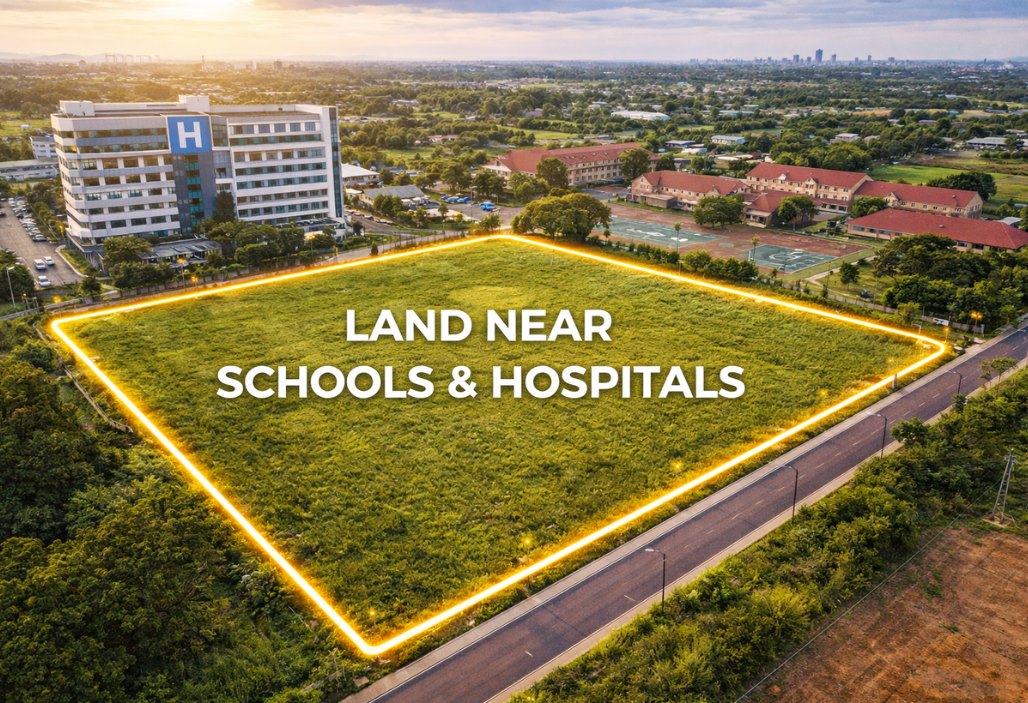
Why Investors Prefer Plots Near Schools and Hospitals: A Deep Dive for Smart Land Buyers
When it comes to property investment, location isn’t just a phrase, it’s the heart of profitability. Among the many factors investors consider, proximity to social amenities like schools and hospitals consistently ranks at the top. Whether you’re a first-time land buyer, seasoned investor, or diaspora land investor exploring opportunities abroad, understanding why plots near schools and healthcare facilities are highly sought after can significantly improve your investment strategy.
In this guide, we explore the reasons investors prefer land near schools and hospitals, backed by real estate trends, market demand data, and proven investment logic.
1. Demand and Liquidity: The Fundamentals of Property Value
One of the core principles of real estate is that high demand increases value and liquidity. Plots near essential services such as schools and hospitals attract consistent buyer interest from families, retirees, and professionals to developers targeting rental homes or gated communities.
Buyers and tenants alike prioritize convenience, which means properties close to such institutions are easier to sell or lease. This translates to:
- Higher resale value
- Faster sales cycles
- Increased rental demand
Investors know this well; liquidity brings peace of mind and stronger returns.
2. Strong Rental Market and Predictable Income
Properties near schools and hospitals offer excellent rental potential:
Near Schools
Parents and guardians often prioritize housing close to reputable educational institutions to reduce commute times, enhance safety, and improve lifestyle convenience. This creates stable demand for residential rental properties near schools from pre-school to secondary level and even universities.
Near Hospitals
Healthcare workers; doctors, nurses, support staff often seek rentals close to their workplace to minimize travel time. Patients’ families also require temporary housing during treatment periods. These add layers of rental demand that other locations don’t always capture.
For investors focused on passive income, this translates to:
- Consistent occupancy
- Premium rental rates
- Lower vacancy risk
3. Increased Property Appreciation and Market Stability
Proximity to quality schools and major health facilities is a known driver of long-term property value appreciation. Here’s how:
Stable Demand
Educational and medical facilities rarely relocate, providing persistent demand for nearby land and housing.
Urban Development
Cities tend to grow outwardly from such hubs meaning land that’s affordable today could become premium tomorrow.
Neighborhood Quality
Areas with schools and hospitals often have better infrastructure, safety, and community planning; all features buyers are willing to pay more for.
This means plots in these zones often appreciate faster than land in isolated or underserved regions.
4. Enhanced Lifestyle Appeal for Homebuyers and Renters
Modern buyers and tenants increasingly value lifestyle conveniences. Consider these priorities:
- Shorter school runs → More family time
- Quick access to emergency medical care → Peace of mind
- Safety and community services → Higher quality living
Areas near schools and hospitals often feature:
✔️ Better public transport
✔️ Stronger security presence
✔️ Access to shops, clinics, banks, and transit hubs
For investors targeting end-users or young families, this translates to higher interest and willingness to pay a premium.
5. Lower Risk and More Predictable Market Trends
Unlike speculative land in remote locations, plots near schools and hospitals are anchored by real, long-term needs. People always need education and healthcare. This consistency makes these land parcels resilient during economic downturns compared to luxury or remote vacation properties that can stagnate when demand dips.
For investors, this offers:
- More predictable returns
- Reduced market volatility
- Long runway for growth
6. Easier Financing and Higher Loan Valuation
Financial institutions often view properties near schools and hospitals more favorably because they:
- Hold value well
- Attract quality buyers
- Show predictable price growth
As a result, lenders may be more willing to finance these properties with better terms, higher loan-to-value ratios, and competitive interest rates — making it easier for buyers to secure financing and increasing the pool of potential buyers and investors.
SEO keywords: land financing near amenities, bank valuation advantages, mortgage better rates.
Conclusion: Why Smart Investors Focus on These Locations
Investors prefer land near schools and hospitals for one simple reason: proven demand, stability, and strong returns. These locations balance everyday needs with long-term growth potential, making them attractive to families, renters, developers, and financial institutions alike.
When evaluating land investment opportunities, always consider the proximity to essential services like education and healthcare. This isn’t just a matter of convenience — it’s a strategic choice that often determines whether an investment thrives or stagnates.