

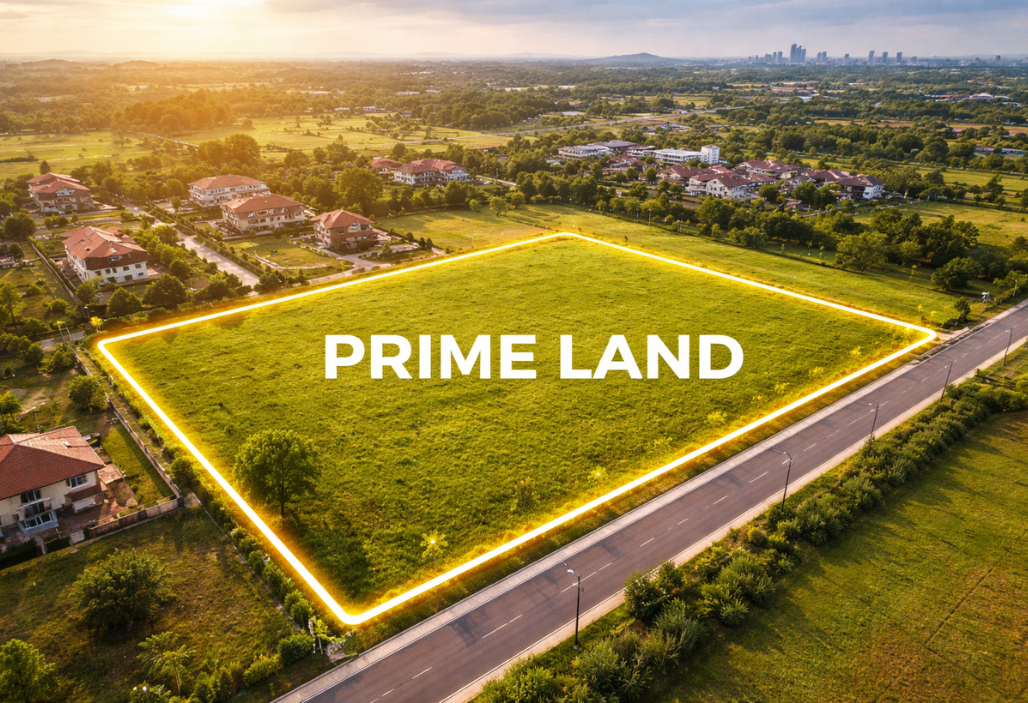
What Makes a Plot “Prime” Land?
When buying land, one question always comes up: what actually makes a plot “prime”? In real estate, prime land refers to plots with high demand, strong appreciation potential, excellent accessibility, and high usability for development or investment. Understanding these factors helps investors avoid costly mistakes and identify land that will grow in value over time.
1. Strategic Location and Accessibility
Location remains the most important factor when determining whether land is prime. Plots near major towns, highways, business hubs, schools, hospitals, and shopping centres tend to command higher prices because they attract more buyers and developers.
Accessibility is equally critical. Land with direct road access or proximity to major transport routes is easier to develop and market, making it more valuable than remote or landlocked parcels.
2. Infrastructure and Essential Utilities
Prime land usually comes with well-developed infrastructure such as roads, electricity, water supply, sewage systems, and internet connectivity. Buyers and developers prefer serviced plots because they reduce development costs and increase convenience.
Additionally, areas with upcoming infrastructure projects such as new bypasses, railways, or commercial centres often become future prime locations due to rising demand and appreciation potential.
3. Zoning Laws and Development Potential
Zoning regulations determine what can be built on a plot; residential, commercial, agricultural, or mixed-use. Prime land usually has flexible or high-demand zoning, enabling profitable development opportunities.
For example, land that can be converted from agricultural to residential or commercial use often increases dramatically in value due to its development potential.
4. Physical Characteristics: Topography, Soil, and Plot Shape
The natural features of land significantly affect its desirability. Flat, well-drained plots with good soil are easier and cheaper to develop, making them more attractive to investors and builders.
Regularly shaped plots such as square or rectangular parcels are also preferred because they maximize usable space and simplify construction.
5. Demand, Population Growth, and Future Prospects
Prime land is often located in areas experiencing rapid population growth, urban expansion, or economic development. High demand combined with limited supply drives prices upward and increases long-term investment returns.
Investors also look for future growth indicators such as upcoming towns, new industrial zones, or planned government projects, which can transform ordinary land into premium property.
6. Security, Neighborhood Quality, and Lifestyle Appeal
Prime plots are typically situated in safe, well-planned neighborhoods with good security, clean environments, and access to lifestyle amenities such as parks, shopping centres, and recreational facilities.
A secure and attractive neighborhood increases demand from families and developers, making the land more valuable and easier to sell.
7. Legal Status and Clean Title Deed
No plot can be considered prime without proper legal documentation. A clean title deed, clear boundaries, and absence of disputes or encumbrances significantly increase land value and buyer confidence.
Investors should always conduct due diligence before purchasing land to ensure it is legally secure and transferable.
Conclusion: How to Identify Prime Land Before Buying
Prime land is not defined by price alone, it is a combination of strategic location, strong infrastructure, clear zoning, good physical characteristics, high demand, legal security, and future growth potential. Smart investors evaluate all these factors together before making a purchase.
If you are looking to invest in land, focus on plots that offer accessibility, serviced infrastructure, development flexibility, and strong long-term appreciation prospects. By doing thorough research and understanding what makes land truly prime, you can make confident investment decisions and build lasting wealth through property ownership.