

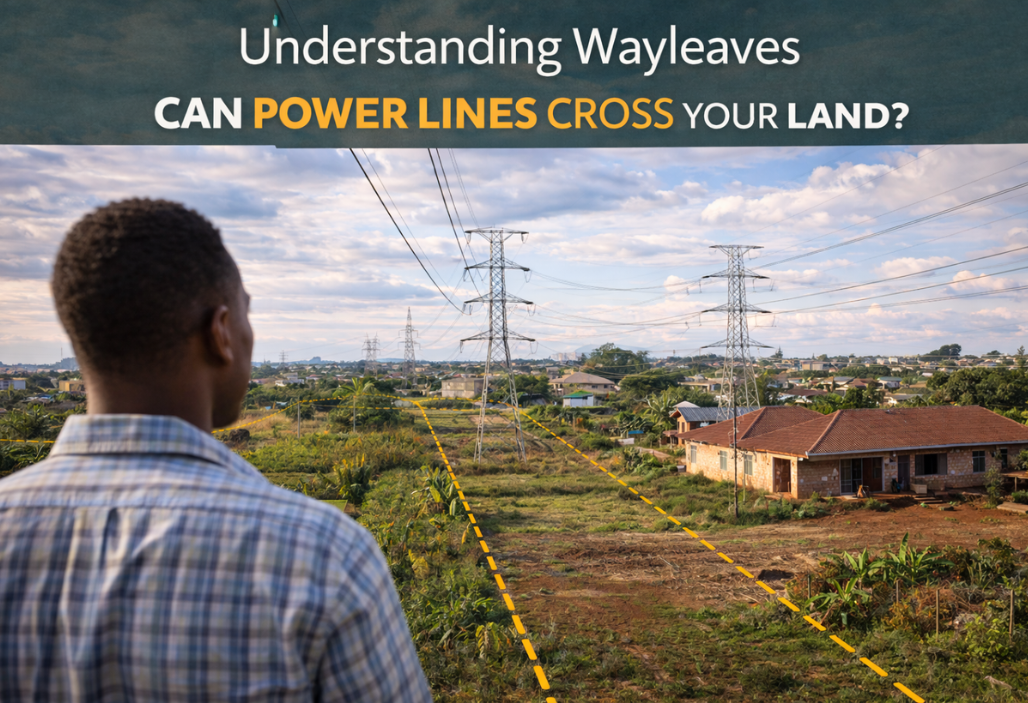
Understanding Wayleaves: Can Power Lines Cross Your Land?
Land ownership gives you the right to use and enjoy your property, but in some cases, certain public utilities such as electricity lines, pipelines, or roads may legally pass through private land. This is where the concept of a wayleave comes in. Many landowners are surprised to find power lines crossing their property, only to learn that the law allows it under specific conditions.
In this guide, we explain what a wayleave is, whether power lines can cross your land, your legal rights as a landowner, and what to check before buying land.
What Is a Wayleave in Land Ownership?
A wayleave is a legal right that allows a government agency, utility company, or authorized organization to pass infrastructure such as power lines, pipelines, sewer lines, or roads through private land. It is also known as a right of way or easement.
Under Kenyan law, a wayleave allows infrastructure to pass over, under, or across land without transferring ownership to the utility company. The land still belongs to the owner, but its use may be limited within the wayleave corridor.
Wayleaves are recognized under laws such as the Wayleave Act, the Energy Act, and the Land Act, which allow public utilities to acquire access to land for infrastructure projects in the public interest.
Can Power Lines Legally Cross Your Land?
Yes, power lines can legally cross your land if a valid wayleave or easement has been granted.
Utility companies such as electricity transmission authorities may obtain permission to install power lines through:
- Agreement with the landowner
- Government approval for public projects
- Compulsory acquisition in public interest
- Registered easement on the title deed
Once a wayleave is established, the utility company has the right to access the land to construct, maintain, or repair the infrastructure, while the landowner retains ownership.
However, the process must follow legal procedures. If a company installs power lines without proper authorization, courts may declare the action trespass and require compensation or removal.
What Restrictions Apply on Land With a Wayleave?
When a power line passes through your land, you can still use the property, but there are limitations within the wayleave corridor.
Allowed uses may include:
- Farming and gardening
- Open parking space
- Roads or driveways
- Recreational fields
Restricted uses often include:
- Building permanent structures
- Digging septic tanks or wells
- Planting tall trees under power lines
- Constructing houses near the line
These restrictions exist to ensure safety and allow maintenance crews to access the infrastructure.
In high-voltage transmission lines, the wayleave corridor may be 30–60 meters wide depending on the voltage, meaning a large portion of land may be affected.
Do Landowners Get Compensation for Wayleaves?
Yes, landowners are usually entitled to compensation when a wayleave is created on private land.
Compensation may cover:
- Loss of use of land
- Damage to crops or buildings
- Reduced property value
- Disturbance during construction
The amount is normally determined by a qualified valuer, and payment must be made before or during the installation of the infrastructure.
In some cases, the agreement lasts as long as the power line exists, meaning the wayleave may remain for many years.
How Wayleaves Affect Land Value
Land with a wayleave is not worthless, but it may have lower market value because:
- Building space is reduced
- Buyers may fear safety risks
- Developers avoid restricted land
- Financing may be harder in some cases
However, land with a wayleave can still be useful for:
- Farming
- Warehousing outside the corridor
- Commercial projects with proper planning
- Long-term investment
Smart investors always check whether a plot has a registered easement or wayleave before buying.
What to Check Before Buying Land
Before purchasing land, always confirm the following:
- Check the title deed for easements or wayleaves
- Visit the land physically to see if power lines pass through
- Ask the seller about any agreements with utility companies
- Conduct a land search at the land registry
- Consult a surveyor or lawyer
Many buyers only discover wayleaves after purchase, which can limit development plans.
What to Do If Power Lines Cross Your Land Without Permission
If power lines are installed without a legal agreement, you have the right to:
- Request proof of wayleave approval
- Demand compensation
- File a complaint with the land authorities
- Take legal action if necessary
Courts have ruled that utilities must follow proper procedures before using private land.
Conclusion
Wayleaves are a normal part of land ownership, especially in developing areas where infrastructure such as electricity lines must pass through private property. Yes, power lines can cross your land legally, but only if proper procedures are followed and the landowner’s rights are respected.
Understanding wayleaves helps you avoid costly mistakes when buying land and ensures that your investment is safe. Always do proper due diligence, consult professionals, and confirm all easements before purchasing any property.
For land investors, knowledge about wayleaves, easements, and land rights is essential for making smart and secure real estate decisions.