

Title Deed Replacement: What to Do if You Lose Your Land Documents in Kenya (2026 Guide)
Losing a title deed ,the document that proves legal ownership of your land in Kenya, can be alarming. Whether misplacement, theft, fire, or accidental destruction, a missing title deed can delay land transactions and create uncertainty about ownership. Fortunately, Kenyan law provides a clear framework for title deed replacement, and with the right steps, you can restore your land ownership documents safely and legally in 2026.
In this guide, we’ll walk you through what to do if you lose your land documents, step by step, including how to apply for a replacement title deed, required documentation, fees, timelines, and important tips to safeguard your land.
What Is a Title Deed & Why It Matters
A title deed is an official legal document issued by the Ministry of Lands & Physical Planning that proves you are the rightful owner of a parcel of land. It contains crucial details such as:
✔ Owner’s full name
✔ Land location and parcel number
✔ Plot size and tenure (freehold or leasehold)
✔ Charges or encumbrances (if any)
Without this document, you cannot sell, transfer, mortgage, or legally develop your land. Therefore, replacing a lost title deed promptly is essential.
Step-by-Step Guide to Replacing a Lost Title Deed
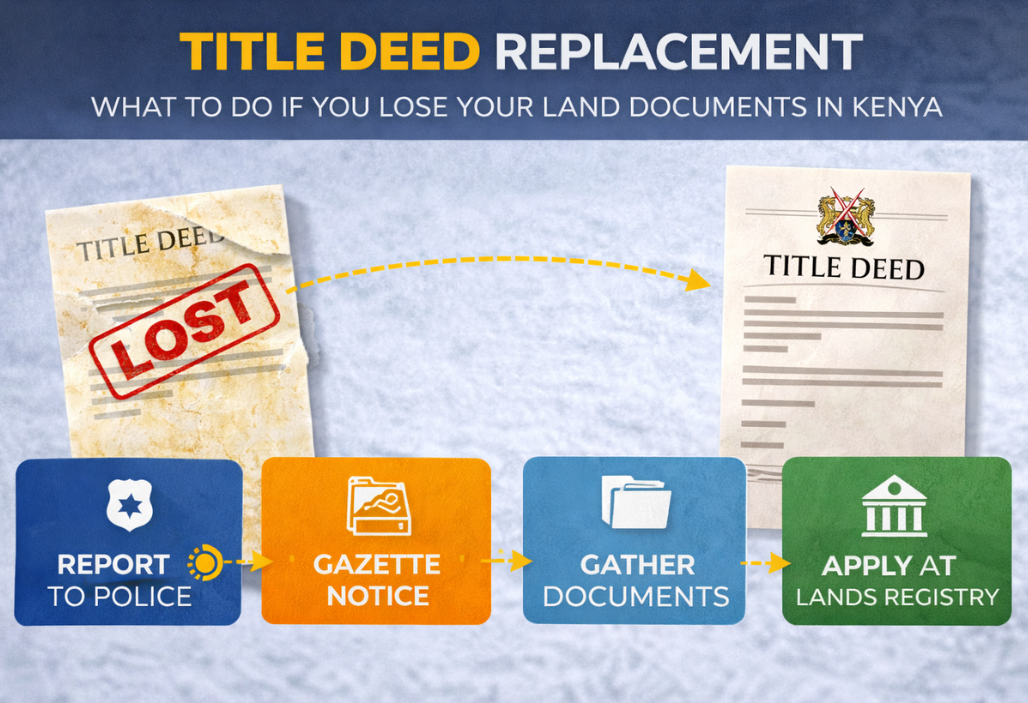
The title deed replacement process involves a series of legal steps to ensure that the missing document isn’t being misused fraudulently. Below is a structured step-by-step pathway:
1. Report the Loss to the Police
The first and most important step is to report the lost title deed at your local police station.
You will receive a Police Loss Report (or loss report certificate), a critical document you’ll use in your application for a replacement title deed at the Lands Registry.
This report protects you and alerts authorities to possible fraudulent use of your missing title deed.
2. Gazette a Public Notice of the Loss
After securing the police loss report, the next step is to announce the lost title deed in the Kenya Gazette.
The gazettement serves as a public alert, giving anyone who may have found or holds an interest in the land the chance to come forward.
How to Gazette Loss of Title Deed:
✔ Prepare a gazette notice (usually through your lawyer)
✔ Submit to Kenya Gazette Services
✔ Pay the required fees
The Gazette notice typically states the title number, land location, and the owner’s name followed by a declaration of loss.
3. Prepare Required Legal Documents
Before filing with the Lands Registry, you need several supporting documents:
📌 Original Police Loss Report
📌 Gazette Notice of Loss
📌 Affidavit of Loss (sworn before a magistrate)
📌 Copy of the Lost Title Deed (if available)
📌 Your Identification (ID and KRA PIN)
📌 Title Deed Search Results (obtained from the Lands Registry or Ardhisasa/eCitizen)
The affidavit of loss confirms under oath that the title deed is missing, lost, or destroyed and has not been transferred, pledged, or involved in any transaction.
4. Apply for Replacement at the Lands Registry
With your documents ready, you must file a title deed replacement application at the relevant Lands Registry (the county where the land is registered). This involves:
- Filling the replacement application forms
- Submitting all original supporting documents
- Paying processing and registration fees
At this stage, the Lands Registrar will:
✔ Conduct a land search to confirm ownership
✔ Verify there are no pending transfers, encumbrances, or disputes
✔ Confirm authenticity of all documents
5. Wait for Processing and Verification
The title deed replacement process includes internal verification and is not instant. The Lands Registry will:
- Confirm land ownership
- Check for any existing transactions on the parcel
- Ensure there are no objections or disputes
Once verified, a replacement (duplicate) title deed will be prepared and registered in your name.
This process typically takes 4–8 weeks, but timelines may vary depending on documentation completeness and registry workload.
Fees and Costs Involved
While costs can vary slightly by location and registry, expect to pay:
✔ Police loss report administrative costs
✔ Gazette publication fees
✔ Lawyer’s drafting and processing fees
✔ Registry processing and replacement fees
✔ Land rates or arrears (if any)
Budgeting for these costs in advance will help avoid delays.
Important Tips to Avoid Future Losses
Replacing a title deed takes time and money so protecting your documents is essential. Here are some best practices:
Keep a Safe Original & Copies
- Store the original title deed in a safe, fireproof location
- Keep scanned copies or certified copies
- Never leave the title deed in public or insecure places
Use Digital Records
- Platforms like Ardhisasa.lands.go.ke and eCitizen allow official electronic land searches, meaning you can verify ownership online without the physical document but the physical title is still required for transfers. Engage a Trustworthy Lawyer
- Lawyers experienced in land law can help you safeguard documents
- They can also guide you in case of any future land transactions
What to Avoid When Replacing a Title Deed
❌ Do not ignore the police report since it’s legally required
❌ Do not attempt private agreements to “duplicate” the title without registry approval
❌ Do not use unverified agents or middlemen. Always go through the Lands Registry
These shortcuts can lead to fraud, legal disputes, or loss of ownership rights.
Conclusion: Secure Your Land by Acting Promptly
Losing your title deed in Kenya doesn’t mean losing your land but it does mean acting quickly, legally, and with the right documentation. By following the steps above:
✔ Report to the police
✔ Gazette the loss
✔ Prepare affidavits and supporting documents
✔ Apply at the Lands Registry
✔ Protect your land going forward
…you can successfully obtain a replacement title deed and continue with peace of mind.
In 2026, with improved digital tools like Ardhisasa and eCitizen searches, plus clear regulatory processes, title deed replacement has become more transparent and secure. Always engage qualified lawyers and conduct due diligence early to protect your investment.
Pro Tip: After replacement, consider storing a certified digital record of your title deed and regularly checking land records online to ensure your ownership remains clean and undisputed.