

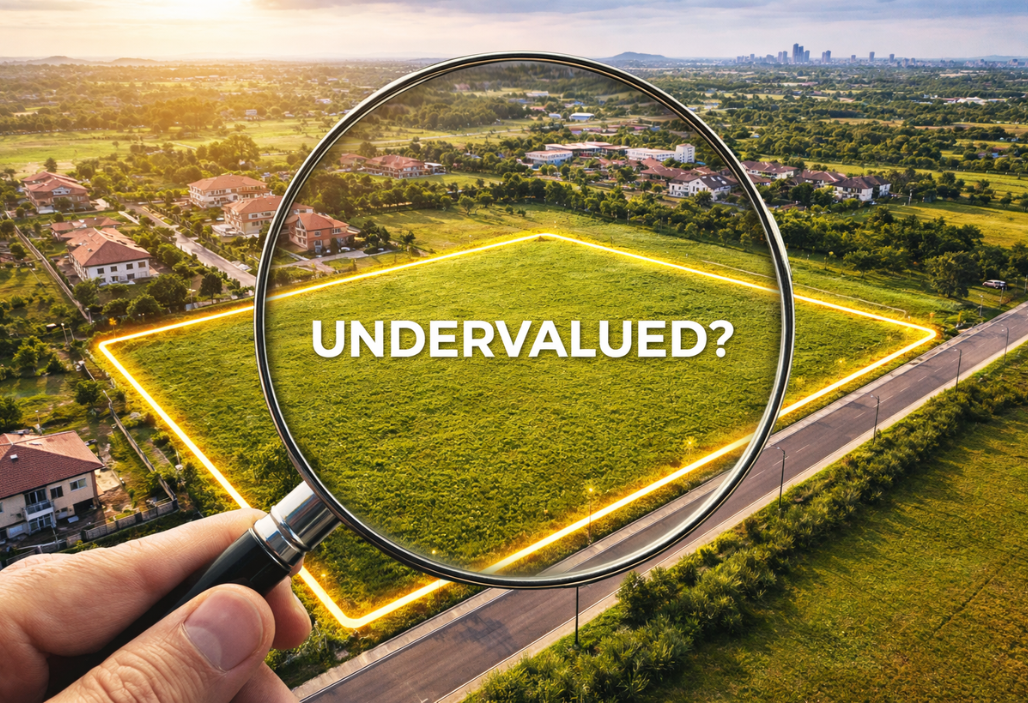
How to Spot Undervalued Land: A Complete Guide for Savvy Investors
Investing in land is one of the smartest long-term wealth-building strategies, but the biggest gains come from buying undervalued land; plots priced below their true market potential. Whether you’re a first-time land buyer, seasoned investor, or diaspora land investor, knowing how to identify undervalued plots gives you a competitive edge and maximizes your return on investment (ROI).
In this guide, we explore real strategies and key indicators to help you confidently spot undervalued land before other buyers do.
What Is Undervalued Land?
Undervalued land refers to property whose market price is significantly lower than its intrinsic or fair value usually due to temporary factors, lack of buyer awareness, or unmet development potential. These properties have high appreciation potential, making them ideal for long-term investment.
1. Analyze Location Trends and Future Growth Indicators
Location is the most important factor in land value, but undervalued land is often found in emerging or up-and-coming areas not just established cities.
Look for regions near:
- New transport infrastructure (highways, bypass roads, rail links)
- Proposed commercial centres or industrial parks
- Planned residential or mixed-use developments
- Future infrastructure upgrades (water, electricity, sewerage)
These areas often sell for lower prices today because demand hasn’t fully caught up but as development accelerates, land prices rise sharply.
2. Compare Market Prices and Conduct a Land Price Analysis
One of the most effective ways to spot undervalued land is through comparative market analysis (CMA):
- Find recent land sale prices in the same area
- Compare plots with similar size, proximity, and features
- Identify significant price gaps
If a particular plot is priced much lower than comparable parcels especially without clear disadvantages it could be undervalued.
Online property platforms and local land agents often list recent transactions that can help establish fair market value.
3. Evaluate Plot Characteristics and Usability
Undervalued land might appear cheap on the surface, but certain physical attributes can dramatically increase long-term value:
✔️ Flat, buildable land
Easy to develop and less costly to prepare for construction.
✔️ Good soil quality
Suitable for residential development or agricultural use.
✔️ Regular plot shape
Square or rectangular land is often more valuable than irregular parcels.
✔️ No environmental hazards
Avoid flood zones, swampy terrains, or unstable slopes.
Investors sometimes overlook these factors, so recognizing them early can reveal high-potential land that’s priced below worth.
4. Check Legal Status and Title Deed Clarity
Some undervalued land is priced low because buyers fear legal issues. Do your due diligence by:
- Confirming the title deed is genuine and clean
- Checking for encumbrances or pending litigation
- Verifying boundaries and survey maps
- Consulting the local land registry or attorney
Clearing legal uncertainties can turn “feared” land into a profitable opportunity.
5. Investigate Utility Access and Infrastructure Availability
Undervalued land often lacks visible infrastructure, leaving buyers hesitant. However, if utilities like water, electricity, internet, and sewer lines are planned but not yet established, the land may still be underpriced.
Contact local utility offices or county authorities to confirm planned infrastructure. This could be your advantage.
6. Explore Seller Motivations and Market Conditions
Below-market pricing might be due to seller circumstances rather than land quality:
- Relocation or urgent sale
- Financial pressure
- Inheritance properties
- Mispriced due to lack of agent expertise
Understanding seller motivation can help you confidently negotiate and secure a bargain.
7. Leverage Local Knowledge and Real Estate Agents
Local real estate agents, land surveyors, and community leaders often know about land sales that aren’t publicly advertised. A local insider can help you:
- Find off-market undervalued plots
- Understand upcoming township plans
- Access land before broader market interest
Conclusion: Maximize Your Land Investm2ent Returns
Identifying undervalued land requires research, market knowledge, and careful evaluation of location, infrastructure, price trends, legal status, and seller motivation. When done right, this strategy leads to high appreciation, premium ROI, and long-term growth.