

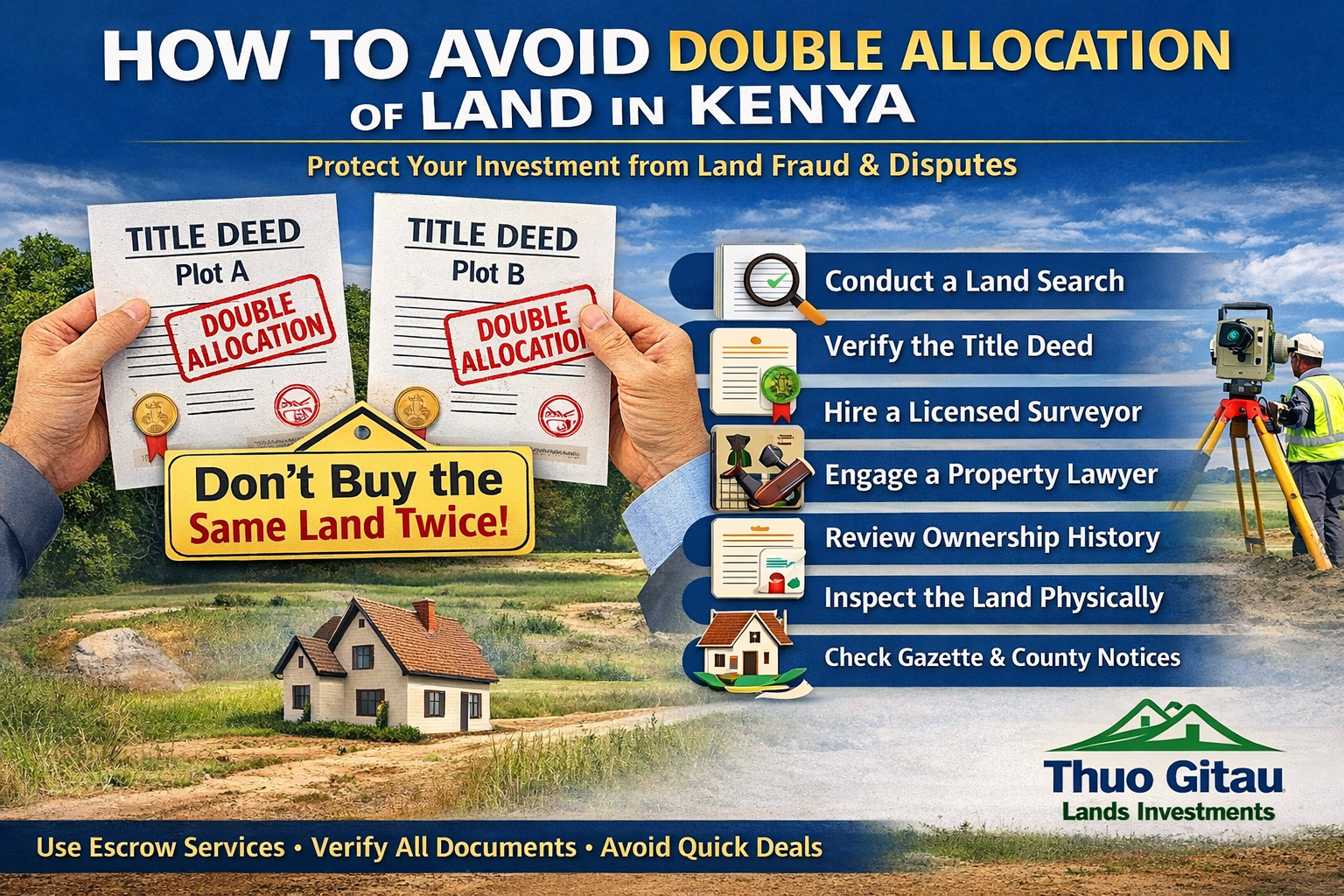
How to Avoid Double Allocation of Land in Kenya (2026 Guide)
Buying land in Kenya is one of the most powerful ways to build wealth and secure generational ownership but it’s not without risks. One of the most costly pitfalls for land buyers is double allocation of land; when the same parcel of land is allocated or sold to more than one person or entity. This often leads to disputes, legal battles, financial loss, and even loss of ownership rights.
In this guide, you’ll learn what double allocation is, why it happens, and practical steps you can take to avoid being a victim of this frustrating scenario.
What Is Double Allocation of Land?
Double allocation occurs when a parcel of land, whether public or private is wrongly allocated or sold to multiple parties. This can happen due to:
- errors in land registries or clerical mistakes by officials
- fraudulent activities or corruption in land offices
- overlapping subdivision plans or unclear boundaries
- fake or duplicate title deeds issued without proper verification
This results in more than one person claiming legal ownership over the same plot, creating conflict and uncertainty in land rights.
Why Double Allocation Happens
Understanding the root causes helps you protect yourself:
1. Administrative Errors
Mistakes during land registration such as issuing duplicate documents are a major source of double allocation. Poor record-keeping or outdated systems increase these risks.
2. Fraud & Corruption
Unscrupulous officials or brokers sometimes manipulate records or issue allocations illegally to profit from multiple sales.
3. Inadequate Land Surveys
When land boundaries aren’t properly defined on maps or on the ground, overlapping parcels can be sold without anyone noticing.
4. Lack of Due Diligence
Buyers who skip important verification steps such as land searches, professional surveys, or legal checks open themselves up to risk.
How to Avoid Double Allocation: Step-by-Step
Here are concrete, legally grounded steps to protect yourself when buying land in Kenya:
1. Conduct an Official Land Search
Before making any payments or signing anything, perform an official land search at:
- the Ministry of Lands Registry
- a county land registry
- or online through platforms like ArdhiSasa / eCitizen
This search reveals:
- current registered owner
- land size, tenure, and parcel number
- any caveats or competing claims against the title
An official search is your first line of defense against double sales and encumbrances.
2. Verify the Original Title Deed
Always demand and inspect the original title deed, not just copies. Check:
- name on the deed versus seller’s ID
- watermarks, stamps, and security features
- history of ownership and previous transfers
A fake or altered deed is a common tool used in fraudulent allocations.
3. Hire a Licensed Surveyor
Surveyors physically verify boundaries, coordinates, and parcel shape using:
- official registry index maps
- ground beacons and GPS tools
This shows if the land matches what is described on the documents and prevents overlapping sales due to boundary confusion.
4. Engage a Property Lawyer
A qualified conveyancing lawyer ensures:
- legal documents are genuine
- the transaction complies with all statutory requirements
- Land Control Board consent is obtained where necessary
- contract terms protect your interests
Lawyers also conduct deeper title tracing and investigate if the land has ever been subject to disputes or irregular allocations.
5. Review Ownership History (Root of Title)
Recent legal rulings emphasize the need to trace the root of title that is, the original legitimate allocation rather than relying on the current certificate alone. An illegally or irregularly obtained title cannot be cured by later transfers, even if the buyer acted in good faith.
6. Inspect the Land Physically
Never buy land “unseen.” A physical visit:
- confirms the existence of the land
- checks for squatter occupation
- validates boundaries in relation to neighboring parcels
- prevents surprise encroachments or fraud misrepresentation
7. Check County & Gazette Notices
Sometimes the Kenya Gazette publishes revocations, caveats, or land dispute warnings. These notices can help you avoid land parcels that are already under challenge or involved in multiple claims.
Final Tips for Smart Land Investment
- Always use escrow services for payments because this protects you until the transfer is legally complete.
- Avoid deals that demand quick, upfront cash transfers.
- Work only with registered estate agents and licensed professionals.
- Keep all receipts, search certificates, and legal documents safe and backed up.
Conclusion
Double allocation of land ruins investments and causes long, costly disputes but it is preventable. With the right mix of due diligence, legal verification, professional surveying, and official searches, you can buy land with confidence and avoid falling victim to overlapping allocations or fraudulent sales.
Your land should be an asset not a legal headache. By following the steps above, you secure not just property, but peace of mind and financial growth.