

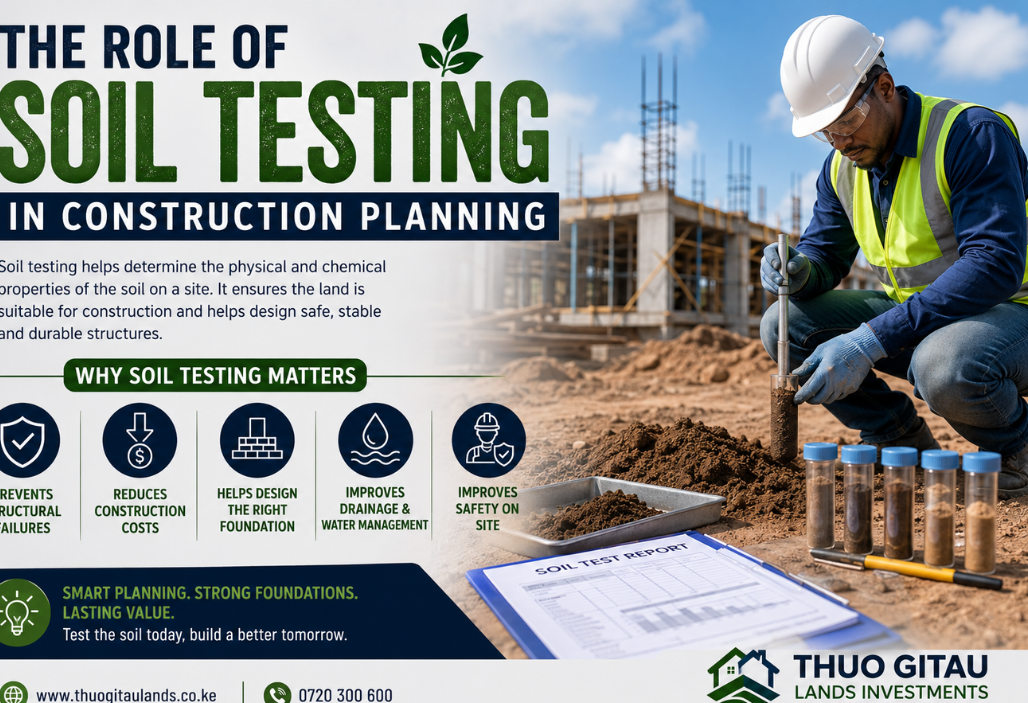
The Role of Soil Testing in Construction Planning.
Why Soil Testing Is Essential Before Construction Begins.
When planning any construction project, whether it’s a residential home, commercial building, apartment complex, or industrial facility, one critical step is often overlooked: soil testing. The condition and quality of the soil beneath a structure significantly influence its stability, durability, and safety. Proper soil testing before construction helps developers, engineers, and property owners make informed decisions, reduce risks, and avoid costly future repairs.
For investors purchasing land for development, understanding the role of soil testing can save both time and money while ensuring the success of a construction project.
What Is Soil Testing?
Soil testing, also known as a geotechnical investigation, is the process of analyzing the physical and chemical properties of soil. Engineers collect soil samples from a site and examine factors such as:
- Soil composition
- Bearing capacity
- Moisture content
- Soil density
- Drainage characteristics
- Soil strength
- Potential for expansion or shrinkage
The results help determine whether the land is suitable for construction and what type of foundation will best support the planned structure.
Why Soil Testing Matters in Construction Planning
1. Determines Soil Bearing Capacity
One of the most important functions of soil testing is measuring the soil’s ability to support a structure’s weight. Different soil types have varying load-bearing capacities.
For example:
- Rocky soil offers excellent support.
- Sandy soil provides moderate stability.
- Clay soil may expand and contract with moisture changes.
Understanding the soil’s bearing capacity allows engineers to design a foundation that can safely support the building for decades.
2. Prevents Structural Failures
Poor soil conditions are among the leading causes of foundation problems worldwide. Without proper soil analysis, buildings may experience:
- Foundation cracks
- Uneven settlement
- Wall cracks
- Floor sinking
- Structural instability
A comprehensive soil test identifies potential risks before construction begins, helping developers avoid expensive structural damage in the future.
3. Improves Construction Safety
Construction safety starts from the ground up. Soil testing helps engineers identify hazards such as weak soils, underground cavities, excessive moisture, or unstable ground conditions.
By understanding these risks early, contractors can implement appropriate engineering solutions that enhance the safety of workers and future occupants.
4. Reduces Construction Costs
Many property owners assume soil testing is an additional expense. In reality, it often saves substantial amounts of money.
Proper soil investigation helps avoid:
- Foundation redesigns
- Unexpected excavation costs
- Project delays
- Costly repairs after construction
Identifying soil-related issues before breaking ground allows developers to budget accurately and prevent unforeseen expenses.
Soil Testing and Foundation Design
Different soil conditions require different foundation systems. The results of a geotechnical report help engineers choose the most appropriate foundation type, including:
- Shallow foundations
- Strip foundations
- Raft foundations
- Pile foundations
- Deep foundations
Selecting the right foundation improves structural performance and increases the lifespan of the building.
The Impact of Soil on Drainage and Water Management
Water is one of the biggest threats to any structure. Soil testing evaluates how well the ground absorbs and drains water.
Poor drainage can cause:
- Waterlogging
- Foundation weakening
- Soil erosion
- Basement flooding
Understanding drainage characteristics allows developers to design effective stormwater management systems and protect the property from water-related damage.
Soil Testing for Land Investors
For individuals purchasing land as an investment, soil testing provides valuable information about future development potential.
Before buying a plot, investors should assess:
- Soil stability
- Construction suitability
- Drainage conditions
- Excavation requirements
- Environmental concerns
This information helps determine the true value of the property and reduces investment risk.
Common Types of Soil Found in Kenya
Kenya has diverse soil conditions depending on the region. Some common soil types include:
- Black cotton soil
- Red volcanic soil
- Sandy soil
- Loamy soil
- Rocky terrain
Among these, black cotton soil often presents construction challenges due to its tendency to expand during wet seasons and shrink during dry periods. Soil testing helps developers identify appropriate engineering solutions when building on such land.