

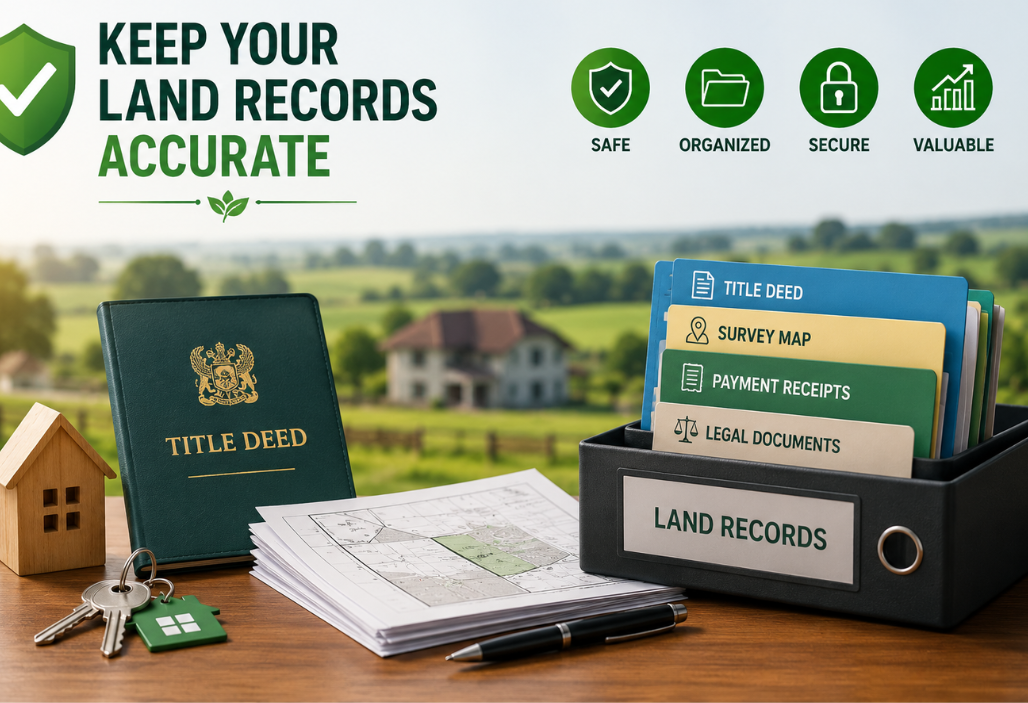
How to Keep Accurate Land Ownership Records.
Introduction
Owning land is one of the most valuable investments a person can make. However, the value and security of that investment depend heavily on maintaining accurate land ownership records. Poor record-keeping can lead to disputes, delays in property transactions, difficulties obtaining financing, and even loss of ownership rights.
In Kenya’s growing real estate market, proper documentation is essential for protecting your property and ensuring smooth future transactions. Whether you are a first-time landowner, investor, developer, or part of the Kenyan diaspora, understanding how to keep accurate land ownership records is critical.
Why Accurate Land Ownership Records Matter
Land records serve as legal proof of ownership and provide a documented history of property transactions. Proper record-keeping helps:
- Protect ownership rights
- Prevent land disputes
- Simplify property sales and transfers
- Support inheritance and succession planning
- Facilitate loan applications using land as collateral
- Verify land boundaries and ownership details
- Reduce the risk of fraud
Without accurate records, property owners may face costly legal challenges and delays when conducting transactions.
Essential Documents Every Landowner Should Keep
Maintaining a complete file for each property is one of the most effective ways to protect your investment.
Important documents include:
1. Title Deed
The title deed is the primary proof of ownership. It contains essential information about the property and registered owner.
Store the original document in a secure location and keep certified copies for reference.
2. Sale Agreement
The sale agreement outlines the terms and conditions under which the property was purchased.
This document provides evidence of the transaction and may be useful during future disputes or ownership verification.
3. Land Search Reports
Official land search reports confirm ownership details and reveal whether any encumbrances exist on the property.
Keep copies of all searches conducted before and after purchase.
4. Survey Maps and Mutation Forms
Survey documents help establish exact property boundaries and reduce the risk of boundary disputes.
These records become especially important during development projects or land subdivision.
5. Transfer Documents
Maintain copies of all transfer forms, consent letters, and registration records associated with ownership changes.
6. Payment Receipts
Keep records of:
- Purchase payments
- Stamp duty payments
- Legal fees
- Survey fees
- Land rates and rent payments
Financial records provide evidence that obligations related to the property have been fulfilled.
Create Both Physical and Digital Records
One common mistake landowners make is relying solely on paper documents.
Physical records can be damaged by:
- Fire
- Floods
- Theft
- Accidental loss
To enhance security:
- Scan all documents.
- Save digital copies in PDF format.
- Store files on secure cloud storage platforms.
- Keep backup copies on external drives.
Having both physical and digital records significantly reduces the risk of losing important ownership information.
Organize Documents Systematically
Proper organization makes document retrieval easier when needed.
Consider creating folders categorized by:
- Ownership documents
- Financial records
- Survey records
- Legal correspondence
- Tax and rate payment receipts
- Development approvals
Label all files clearly and update them regularly.
This organized approach saves time during property sales, audits, or legal reviews.
Update Records After Every Transaction
Land ownership records should never remain static.
Whenever a property-related event occurs, update your files immediately.
Examples include:
- Ownership transfers
- Boundary adjustments
- Subdivision approvals
- Change of address
- Mortgage registration
- Construction approvals
Maintaining current records ensures your property information remains accurate and legally valid.
Monitor Government Land Records
Property owners should periodically verify information held by relevant land registries.
Conducting occasional official land searches can help identify:
- Unauthorized changes
- Registration errors
- Fraudulent claims
- Pending encumbrances
Early detection allows issues to be resolved before they become major legal problems.
Protect Records During Succession Planning
Many land disputes arise when ownership records are unclear after a property owner’s death.
To prevent complications:
- Prepare a valid will.
- Document beneficiaries clearly.
- Keep succession records updated.
- Inform trusted family members where documents are stored.
Proper succession planning ensures a smooth transfer of ownership and protects family assets.
Work With Qualified Professionals
Professional support helps ensure records remain accurate and legally compliant.
Consider working with:
- Property advocates
- Licensed surveyors
- Land consultants
- Real estate professionals
These experts can help verify documents, resolve discrepancies, and ensure all transactions are properly documented.
Common Record-Keeping Mistakes to Avoid
Many landowners unknowingly expose themselves to risk by:
- Misplacing original title deeds
- Failing to keep payment receipts
- Neglecting digital backups
- Ignoring land registry updates
- Failing to document boundary changes
- Storing records in insecure locations
Avoiding these mistakes strengthens ownership protection and reduces future complications.