

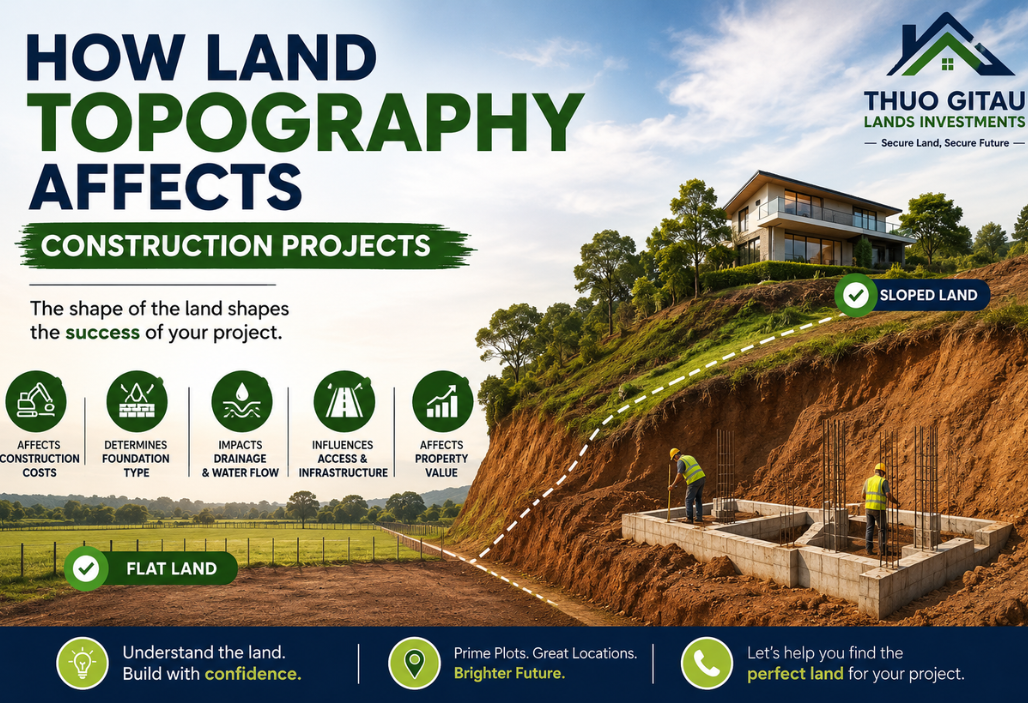
How Land Topography Affects Construction Projects.
Introduction
When buying land for development, many investors focus on location, accessibility, and price. However, one critical factor that is often overlooked is land topography. The shape, slope, elevation, and natural features of a piece of land can significantly influence construction costs, building design, drainage systems, and the overall success of a development project.
Whether you are planning to build a residential home, commercial property, apartments, or an agricultural project, understanding land topography before purchase can save you time, money, and future complications.
What Is Land Topography?
Land topography refers to the physical characteristics of land, including:
- Slope and gradient
- Elevation levels
- Hills and valleys
- Natural drainage patterns
- Rock formations
- Soil composition
- Water bodies and wetlands
These features determine how suitable a piece of land is for construction and what modifications may be required before development begins.
1. Topography Influences Construction Costs
One of the biggest impacts of land topography is on construction expenses.
A flat piece of land is generally easier and cheaper to develop because it requires minimal site preparation. In contrast, steep or uneven land often requires:
- Excavation and grading
- Retaining walls
- Additional foundation work
- Soil stabilization measures
- Specialized engineering designs
For example, building on a sloping plot may require cutting into a hillside or filling lower areas to create a stable foundation. These additional processes can substantially increase the total project budget.
2. Foundation Design Depends on Land Slope
The foundation is one of the most important parts of any structure. Topography directly affects the type of foundation required.
Flat land often supports standard foundations, while sloped or rocky terrain may require:
- Deep foundations
- Stepped foundations
- Reinforced retaining structures
- Pile foundations
Poor foundation planning on unsuitable terrain can lead to structural cracks, settlement problems, and expensive repairs in the future.
Conducting a professional site survey before construction helps determine the best foundation design for long-term stability.
3. Drainage and Water Management
Natural drainage patterns play a major role in construction planning.
Land that sits in a low-lying area may be prone to:
- Flooding
- Waterlogging
- Soil erosion
- Foundation weakening
Conversely, elevated land often offers better drainage and reduced flood risks.
Proper topographical assessment helps developers design effective drainage systems, including:
- Stormwater channels
- Drainage trenches
- Culverts
- Water harvesting systems
Good drainage protects buildings from moisture damage and extends the lifespan of structures.
4. Accessibility and Infrastructure Development
Topography also affects how easily roads, driveways, and utility services can be installed.
Steep terrain can make it difficult and expensive to construct:
- Access roads
- Parking areas
- Sewer lines
- Water connections
- Electricity infrastructure
Flat and gently sloping plots typically offer easier access and lower infrastructure installation costs.
Investors should evaluate whether terrain conditions could affect future accessibility for residents, customers, or tenants.
5. Environmental and Soil Stability Considerations
Certain topographical features present environmental risks.
Examples include:
- Landslide-prone slopes
- Erosion-sensitive areas
- Wetlands
- Rocky outcrops
These conditions may require environmental assessments and engineering solutions before construction approval.
Soil stability is closely linked to topography. Areas with unstable soil conditions can compromise building safety and increase maintenance costs over time.
Professional geotechnical studies help identify potential challenges early in the planning process.
6. Impact on Property Value
Interestingly, topography can either increase or decrease a property’s market value.
Properties with attractive elevated views often command premium prices because they offer:
- Better scenery
- Enhanced privacy
- Improved air circulation
- Reduced flooding risk
However, extremely steep terrain may discourage buyers due to higher development costs.
The ideal investment often combines moderate elevation, good drainage, accessibility, and manageable construction requirements.
7. Architectural Design Opportunities
Not all challenging topography is a disadvantage.
Creative architects often use natural land features to design unique developments such as:
- Split-level homes
- Terraced houses
- Hillside villas
- Scenic commercial properties
These designs can enhance aesthetics and increase market appeal.
Rather than fighting the natural landscape, successful developers often incorporate topographical features into their building plans.
How to Evaluate Topography Before Buying Land
Before purchasing any plot, consider the following steps:
- Conduct a professional land survey.
- Request topographical maps.
- Assess drainage patterns during rainy seasons.
- Consult a geotechnical engineer.
- Evaluate access roads and utility connections.
- Review local zoning and development regulations.
- Estimate site preparation costs before committing to purchase.
These measures help investors make informed decisions and avoid unexpected construction challenges.