

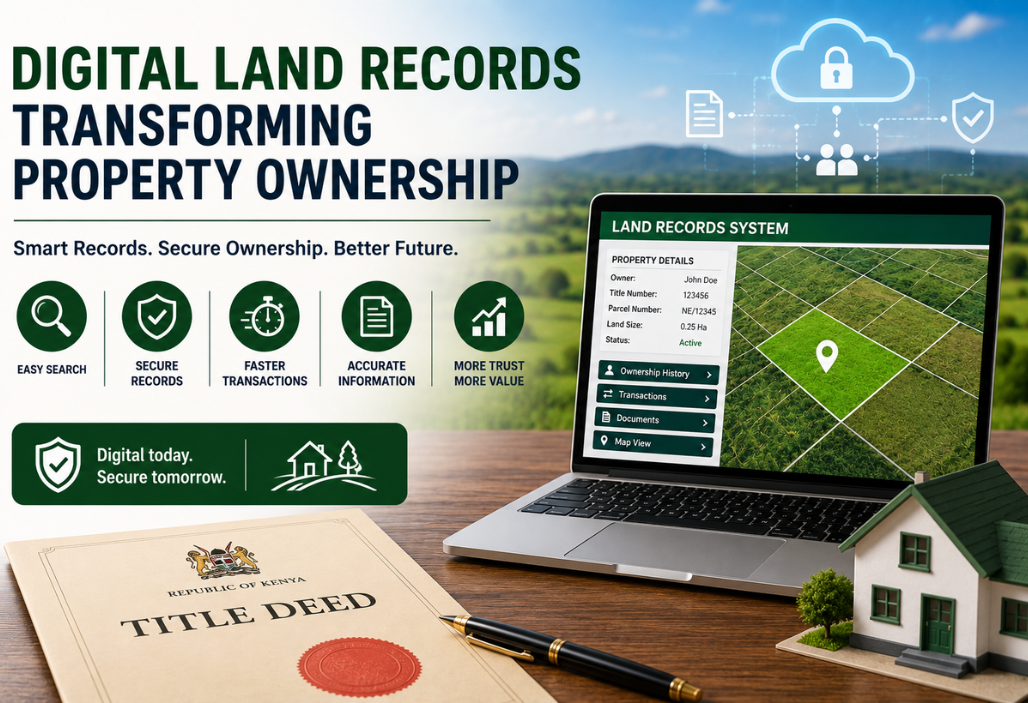
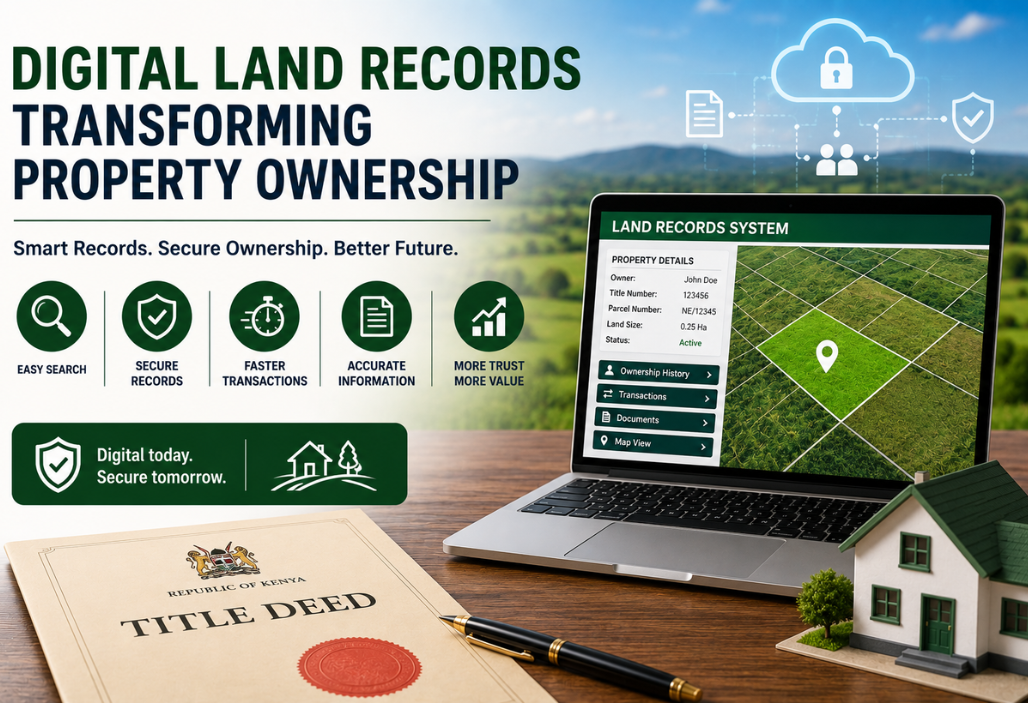
How Digital Land Records Are Transforming Property Ownership.
The Future of Land Management and Real Estate Investment in Kenya
The real estate industry is undergoing a major transformation, and one of the most significant developments is the adoption of digital land records. Traditionally, land ownership records were stored in physical files, making them vulnerable to loss, damage, fraud, and administrative delays. Today, digital systems are revolutionizing how land information is stored, accessed, and managed.
For property owners, investors, and land buyers in Kenya, understanding digital land records is essential. These systems are improving transparency, enhancing security, and making land transactions faster and more efficient.
What Are Digital Land Records?
Digital land records are electronic versions of land ownership information maintained through computerized systems rather than paper-based files.
These records may include:
- Property ownership details
- Title deed information
- Survey maps
- Land parcel numbers
- Transfer records
- Land rates information
- Historical ownership data
- Encumbrances and restrictions
Through digitization, land records become easier to access, verify, and update, reducing the inefficiencies associated with manual record-keeping.
Why Traditional Land Records Created Challenges
For decades, property transactions often faced delays due to paper-based land management systems.
Common challenges included:
- Missing or damaged files
- Slow verification processes
- Fraudulent title deeds
- Double land allocation
- Manual errors in record keeping
- Lengthy transfer procedures
- Limited access to land information
These issues created uncertainty for investors and sometimes resulted in costly disputes.
How Digital Land Records Are Improving Property Ownership
1. Faster Land Searches
One of the greatest advantages of digital land records is the ability to conduct land searches more efficiently.
Buyers can verify ownership details, restrictions, and property information much faster than before.
This helps investors make informed decisions and reduces transaction delays.
2. Improved Transparency
Digital systems provide accurate and accessible property records.
Greater transparency helps:
- Reduce corruption
- Minimize fraudulent transactions
- Improve accountability
- Increase investor confidence
When ownership information is readily available, property buyers can verify records before purchasing land.
3. Enhanced Security
Paper documents can be destroyed by fire, floods, theft, or deterioration over time.
Digital land records offer stronger protection through:
- Electronic backups
- Secure databases
- Controlled access systems
- Data recovery mechanisms
This significantly reduces the risk of losing critical ownership information.
4. Reduced Property Fraud
Land fraud remains a major concern in many property markets.
Digital verification systems help identify:
- Fake title deeds
- Unauthorized ownership changes
- Duplicate records
- Suspicious transactions
As a result, buyers enjoy greater protection when investing in land.
5. Faster Land Transfers
Property ownership transfers can now be processed more efficiently through digital platforms.
Digitized workflows help reduce:
- Administrative delays
- Paperwork errors
- Repeated document submissions
- Processing bottlenecks
This benefits both buyers and sellers by creating a smoother transaction process.
The Impact on Real Estate Investors
For land investors, digital land records offer several important advantages.
Better Due Diligence
Investors can verify property information before committing funds.
This reduces investment risks and helps avoid disputes.
Increased Confidence
Reliable ownership records improve confidence among local and international investors.
When land information is accurate and accessible, investors are more willing to participate in the property market.
Improved Market Efficiency
Digital systems accelerate transactions and create a more predictable investment environment.
This can increase demand for land and stimulate growth in the real estate sector.
The Role of Technology in Modern Land Management
Modern land administration increasingly relies on technology such as:
- Geographic Information Systems (GIS)
- Digital mapping tools
- Online land registries
- Cloud-based databases
- Electronic document management systems
These innovations help governments and land authorities maintain accurate property records while improving service delivery.
As technology continues to evolve, property ownership management is expected to become even more efficient and secure.
Challenges of Digital Transformation
While digitization offers numerous benefits, several challenges remain.
These include:
- Data migration from old records
- Cybersecurity concerns
- System maintenance costs
- Limited digital literacy among some users
- Infrastructure limitations in certain regions
Despite these challenges, the long-term benefits far outweigh the difficulties associated with implementation.
What Digital Land Records Mean for Kenya’s Future
As Kenya continues modernizing its land administration systems, digital records are expected to play a critical role in improving property ownership processes.
The benefits include:
- Faster service delivery
- Reduced fraud
- Greater transparency
- Increased investor confidence
- More efficient land transactions
- Improved land governance