

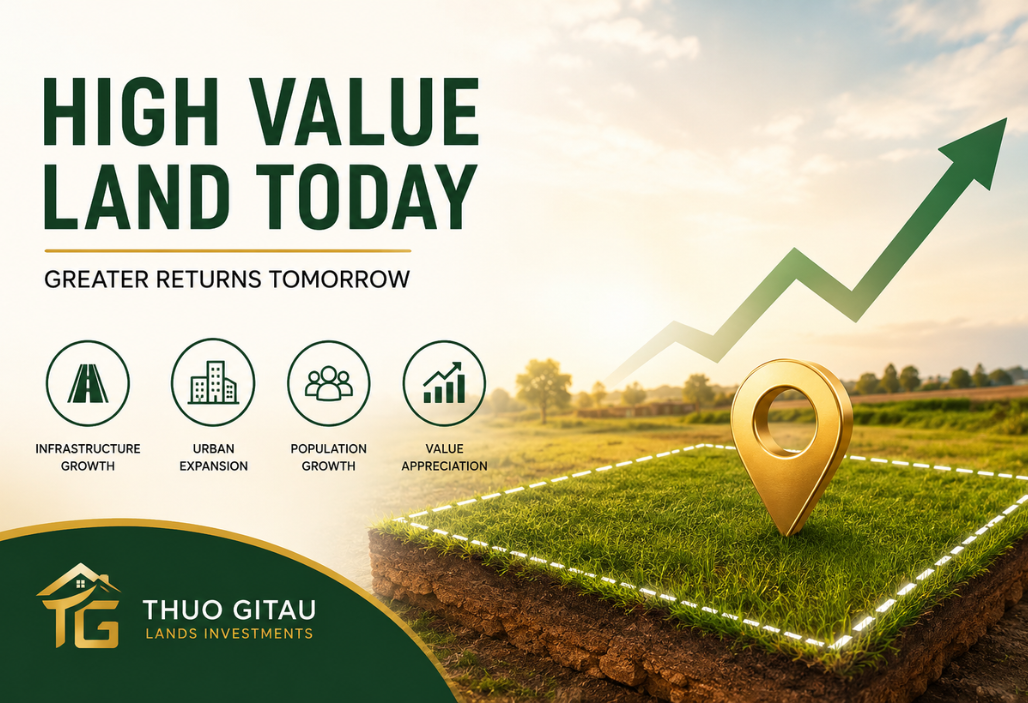
Signs That a Piece of Land Will Increase in Value.
How to Identify High-Potential Land Investment Opportunities in Kenya.
Land remains one of the most reliable and profitable investment options in Kenya. Unlike many other assets, land is finite, meaning its value often increases as demand grows. However, not every parcel of land appreciates at the same rate. Smart investors know how to identify the signs that indicate a piece of land is likely to increase in value over time.
If you’re planning to invest in land, understanding these indicators can help you maximize returns and make informed decisions. Here are the key signs that a piece of land will appreciate in value.
1. Infrastructure Development Nearby
One of the strongest indicators of future land appreciation is ongoing or planned infrastructure development. New roads, highways, bypasses, railways, airports, and utility projects often trigger rapid growth in surrounding areas.
When accessibility improves, businesses, developers, and homebuyers become more interested in the region, increasing demand for land.
Examples of Infrastructure That Boosts Land Value:
- New tarmac roads
- Bypasses and highways
- Railway stations
- Water and electricity connections
- Internet and communication networks
- Public transport expansion
Investors who buy land before major infrastructure projects are completed often enjoy significant capital gains.
2. Population Growth in the Area
As populations increase, the demand for housing, commercial spaces, schools, and social amenities rises. This creates pressure on available land, driving prices upward.
Areas experiencing rapid urbanization or population growth are often excellent locations for land investment.
Signs of Population Growth:
- New residential developments
- Increased construction activity
- Expansion of shopping centers
- Growth of educational institutions
- Rising demand for rental housing
Population growth is one of the primary factors behind long-term land appreciation.
3. Proximity to Growing Towns and Cities
Land located near expanding urban centers tends to appreciate faster than land in remote locations.
As cities become congested and land prices within urban areas rise, investors and homebuyers look for affordable alternatives in surrounding regions. This process creates demand in satellite towns and peri-urban areas.
High-Potential Locations Often Include:
- Areas near Nairobi’s satellite towns
- Regions adjacent to industrial parks
- Locations near economic zones
- Areas close to major transport corridors
Buying land on the path of urban expansion can generate substantial returns over time.
4. Presence of Essential Utilities
Land with access to electricity, water, sewer systems, and good road networks is generally more valuable and attractive to buyers.
Properties that already have basic utilities require less development investment, making them easier to sell or develop.
Before purchasing land, assess the availability of:
- Electricity connections
- Clean water supply
- Drainage systems
- Road access
- Internet connectivity
The easier it is to develop the land, the greater its potential for appreciation.
5. Commercial and Industrial Development
When businesses begin investing in an area, land values often rise significantly. Commercial developments create jobs, attract residents, and stimulate economic growth.
Examples include:
- Shopping malls
- Factories
- Industrial parks
- Warehouses
- Business hubs
- Hospitality facilities
Investors should monitor regions where commercial activity is increasing because such developments often indicate future demand for surrounding land.
6. Government and Private Sector Investments
Large-scale investments by governments or private companies can transform previously overlooked areas into investment hotspots.
Projects such as:
- Affordable housing programs
- Special economic zones
- Industrial parks
- Universities
- Hospitals
- Government offices
often attract additional development and increase land demand.
Researching county development plans and upcoming projects can help investors identify emerging opportunities before prices rise.
7. Scarcity of Available Land
Land is a limited resource. In areas where available plots are becoming scarce, prices tend to rise due to increased competition among buyers.
Scarcity becomes especially important in:
- Urban centers
- Prime residential neighborhoods
- Commercial districts
- Tourist destinations
When demand exceeds supply, appreciation becomes almost inevitable.
8. Positive Market Trends
Monitoring local real estate trends can reveal whether an area is experiencing consistent growth.
Look for:
- Rising land prices over several years
- Increased transaction volumes
- Growing investor interest
- New real estate developments
Historical appreciation trends often provide valuable insight into future performance.
9. Secure Ownership and Proper Documentation
Land with a clean title deed and verified ownership is more attractive to buyers and investors.
Properties with legal disputes, unclear boundaries, or ownership conflicts may struggle to appreciate because potential buyers avoid risk.
Always ensure:
- Title deeds are authentic
- Land records are verified
- Boundaries are clearly defined
- Necessary approvals are available