

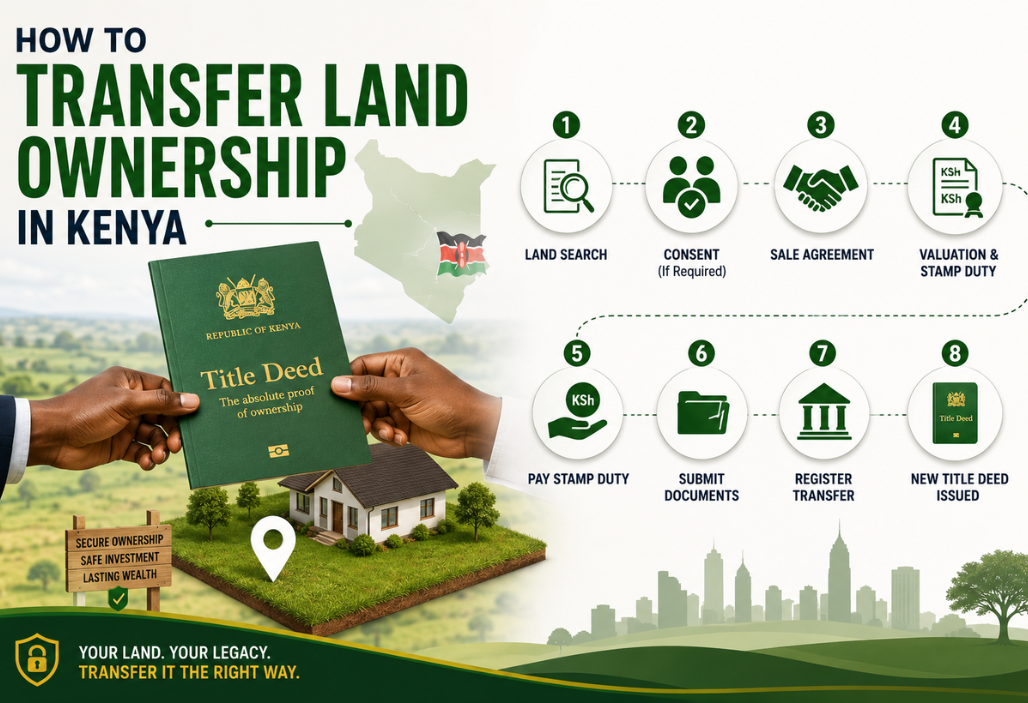
How to Transfer Land Ownership in Kenya.
Everything You Need to Know About Land Transfer in Kenya.
Transferring land ownership is one of the most important legal processes in property transactions. Whether you are buying land, inheriting property, receiving a gift, or transferring ownership between family members, understanding the legal requirements can help you avoid delays, disputes, and costly mistakes.
In Kenya, land ownership transfer is regulated by the Ministry of Lands and governed by various laws that ensure property transactions are transparent and legally binding. This guide explains the complete process of transferring land ownership in Kenya and highlights the key documents, costs, and procedures involved.
What Is Land Ownership Transfer?
Land ownership transfer is the legal process through which ownership rights are moved from one person or entity to another. Once the transfer is completed and registered, the new owner’s name appears on the title deed as the lawful proprietor of the property.
Land transfers commonly occur through:
- Purchase and sale transactions
- Gifts between family members
- Inheritance and succession
- Court orders
- Business asset transfers
Understanding the process helps protect both buyers and sellers while ensuring compliance with Kenyan property laws.
Step 1: Conduct an Official Land Search
Before initiating any transfer, conduct a land search at the relevant land registry.
The land search helps verify:
- The registered owner
- Land parcel details
- Existing encumbrances
- Caveats or restrictions
- Outstanding charges or mortgages
This is a critical due diligence step that protects buyers from fraud and ownership disputes.
Step 2: Obtain Consent to Transfer
For agricultural land, consent from the Land Control Board (LCB) is generally required before ownership can be transferred.
The Land Control Board reviews the transaction and confirms that it complies with land laws and regulations.
Failure to obtain the necessary consent can render the transaction invalid.
Step 3: Prepare and Sign the Sale Agreement
A legally binding sale agreement should be drafted by a qualified property lawyer.
The agreement typically includes:
- Buyer and seller details
- Property description
- Purchase price
- Payment terms
- Completion period
- Obligations of both parties
This document serves as evidence of the transaction and protects the interests of both parties.
Step 4: Property Valuation for Stamp Duty
The government requires a valuation of the property before transfer.
A government valuer assesses the property’s market value to determine the amount of stamp duty payable.
Stamp duty rates generally depend on the property’s location and assessed value.
Valuation ensures transparency and prevents under-declaration of property values during transfer.
Step 5: Pay Stamp Duty
Stamp duty is a mandatory tax paid during land ownership transfer.
Once valuation is completed, the buyer pays the required stamp duty through the designated government payment channels.
Proof of payment must be presented before registration of the transfer can proceed.
Failure to pay stamp duty may delay or invalidate the transfer process.
Step 6: Complete Transfer Documents
Several legal documents must be prepared and submitted for registration.
Common documents include:
- Original title deed
- Land transfer forms
- National ID copies
- KRA PIN certificates
- Passport photographs
- Land Control Board consent (where applicable)
- Stamp duty payment receipts
- Sale agreement
Ensuring all documentation is complete reduces delays and accelerates approval.
Step 7: Register the Transfer at the Land Registry
Once all documents have been verified, the transfer is registered at the relevant land registry.
The registrar reviews the documentation and updates ownership records.
After registration is completed, a new title deed is issued in the buyer’s name, officially confirming ownership.
This final step legally transfers all ownership rights to the new proprietor.
Common Mistakes to Avoid During Land Transfer
Many property buyers encounter challenges because they overlook important due diligence steps.
Avoid these common mistakes:
- Buying land without conducting a search
- Failing to verify the seller’s identity
- Ignoring outstanding loans or encumbrances
- Using unqualified agents
- Skipping legal representation
- Incomplete documentation
- Delaying stamp duty payments
Working with experienced professionals significantly reduces transaction risks.
Why Professional Guidance Matters
Land transactions involve legal, financial, and administrative procedures that can be complex for first-time buyers.
Engaging reputable land investment companies, surveyors, and property lawyers helps ensure:
- Legal compliance
- Proper documentation
- Faster processing
- Reduced risk of fraud
- Secure ownership transfer
Professional assistance provides peace of mind and protects your investmenHow to Transfer Land Ownership in Kenya: A Complete Step-by-Step Guide
Everything You Need to Know About Land Transfer in Kenya
Transferring land ownership is one of the most important legal processes in property transactions. Whether you are buying land, inheriting property, receiving a gift, or transferring ownership between family members, understanding the legal requirements can help you avoid delays, disputes, and costly mistakes.
In Kenya, land ownership transfer is regulated by the Ministry of Lands and governed by various laws that ensure property transactions are transparent and legally binding. This guide explains the complete process of transferring land ownership in Kenya and highlights the key documents, costs, and procedures involved.
What Is Land Ownership Transfer?
Land ownership transfer is the legal process through which ownership rights are moved from one person or entity to another. Once the transfer is completed and registered, the new owner’s name appears on the title deed as the lawful proprietor of the property.
Land transfers commonly occur through:
- Purchase and sale transactions
- Gifts between family members
- Inheritance and succession
- Court orders
- Business asset transfers
Understanding the process helps protect both buyers and sellers while ensuring compliance with Kenyan property laws.
SEO Keywords: land ownership transfer Kenya, property transfer process, title deed transfer, land registration Kenya
Step 1: Conduct an Official Land Search
Before initiating any transfer, conduct a land search at the relevant land registry.
The land search helps verify:
- The registered owner
- Land parcel details
- Existing encumbrances
- Caveats or restrictions
- Outstanding charges or mortgages
This is a critical due diligence step that protects buyers from fraud and ownership disputes.
SEO Keywords: land search Kenya, verify land ownership, title deed verification, land due diligence
Step 2: Obtain Consent to Transfer
For agricultural land, consent from the Land Control Board (LCB) is generally required before ownership can be transferred.
The Land Control Board reviews the transaction and confirms that it complies with land laws and regulations.
Failure to obtain the necessary consent can render the transaction invalid.
SEO Keywords: Land Control Board Kenya, agricultural land transfer, land transfer consent
Step 3: Prepare and Sign the Sale Agreement
A legally binding sale agreement should be drafted by a qualified property lawyer.
The agreement typically includes:
- Buyer and seller details
- Property description
- Purchase price
- Payment terms
- Completion period
- Obligations of both parties
This document serves as evidence of the transaction and protects the interests of both parties.
SEO Keywords: land sale agreement Kenya, property lawyer Kenya, land purchase process
Step 4: Property Valuation for Stamp Duty
The government requires a valuation of the property before transfer.
A government valuer assesses the property’s market value to determine the amount of stamp duty payable.
Stamp duty rates generally depend on the property’s location and assessed value.
Valuation ensures transparency and prevents under-declaration of property values during transfer.
SEO Keywords: stamp duty Kenya, land valuation process, property valuation Kenya
Step 5: Pay Stamp Duty
Stamp duty is a mandatory tax paid during land ownership transfer.
Once valuation is completed, the buyer pays the required stamp duty through the designated government payment channels.
Proof of payment must be presented before registration of the transfer can proceed.
Failure to pay stamp duty may delay or invalidate the transfer process.
SEO Keywords: stamp duty payment Kenya, property taxes Kenya, land transfer costs
Step 6: Complete Transfer Documents
Several legal documents must be prepared and submitted for registration.
Common documents include:
- Original title deed
- Land transfer forms
- National ID copies
- KRA PIN certificates
- Passport photographs
- Land Control Board consent (where applicable)
- Stamp duty payment receipts
- Sale agreement
Ensuring all documentation is complete reduces delays and accelerates approval.
SEO Keywords: land transfer documents, title deed transfer requirements, property registration Kenya
Step 7: Register the Transfer at the Land Registry
Once all documents have been verified, the transfer is registered at the relevant land registry.
The registrar reviews the documentation and updates ownership records.
After registration is completed, a new title deed is issued in the buyer’s name, officially confirming ownership.
This final step legally transfers all ownership rights to the new proprietor.
SEO Keywords: land registry Kenya, property registration process, title deed issuance
Common Mistakes to Avoid During Land Transfer
Many property buyers encounter challenges because they overlook important due diligence steps.
Avoid these common mistakes:
- Buying land without conducting a search
- Failing to verify the seller’s identity
- Ignoring outstanding loans or encumbrances
- Using unqualified agents
- Skipping legal representation
- Incomplete documentation
- Delaying stamp duty payments
Working with experienced professionals significantly reduces transaction risks.
Why Professional Guidance Matters
Land transactions involve legal, financial, and administrative procedures that can be complex for first-time buyers.
Engaging reputable land investment companies, surveyors, and property lawyers helps ensure:
- Legal compliance
- Proper documentation
- Faster processing
- Reduced risk of fraud
- Secure ownership transfer
Professional assistance provides peace of mind and protects your investment.
Conclusion
Transferring land ownership in Kenya requires careful planning, proper documentation, and adherence to legal procedures. From conducting a land search and obtaining necessary consents to paying stamp duty and registering the transfer, every step plays a crucial role in securing lawful ownership.
Whether you are buying land for residential development, commercial investment, or long-term wealth creation, understanding the transfer process helps you make informed decisions and safeguard your property rights.
By conducting thorough due diligence and working with trusted professionals, you can complete your land transfer smoothly and confidently while protecting your investment for years to come.t.