

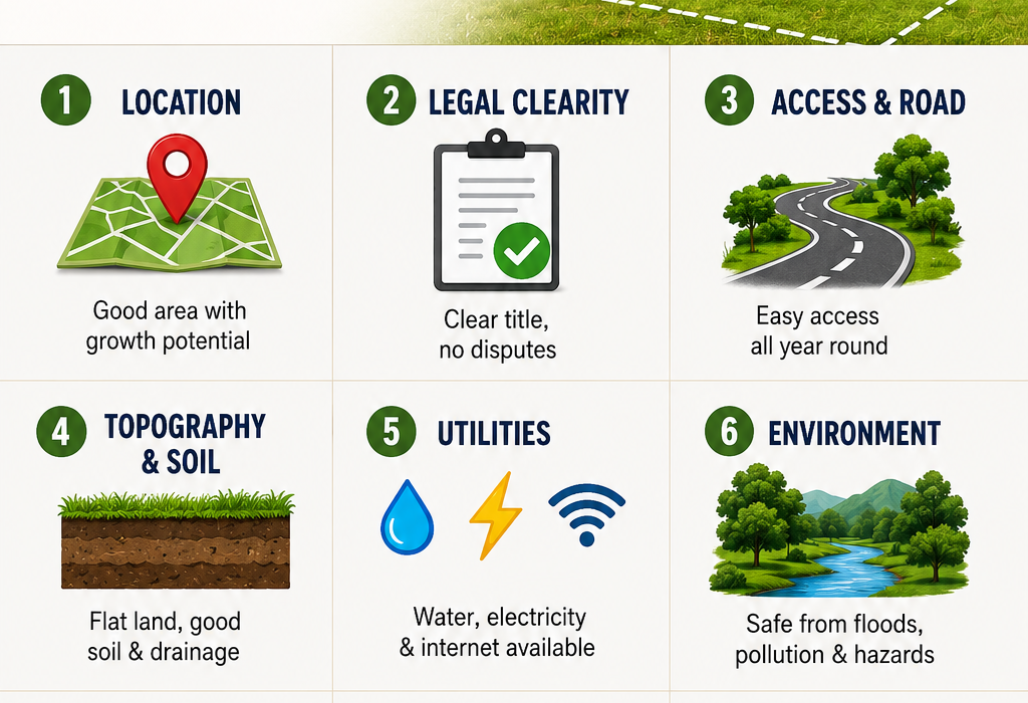
How to Evaluate Land Before Making a Purchase.
The Ultimate Guide for Smart Land Investors in Kenya.
Purchasing land is one of the most rewarding investments you can make. Whether you are buying land for residential development, commercial use, farming, or long-term investment, conducting proper due diligence is essential. Many investors rush into purchasing plots based on attractive prices or promises of future growth, only to encounter legal disputes, poor infrastructure, or unexpected development restrictions.
This guide explains how to evaluate land before making a purchase and helps you make informed investment decisions while protecting your hard-earned money.
1. Verify Ownership and Title Deed Authenticity
The first step in evaluating any piece of land is confirming that the seller is the legitimate owner. Request a copy of the title deed and conduct an official land search through the Ministry of Lands.
A land search helps you determine:
- The registered owner
- Whether the land has existing disputes
- Outstanding loans or encumbrances
- Caveats or restrictions affecting the property
Buying land without verifying ownership significantly increases the risk of fraud and legal complications.
Keywords: title deed verification, land ownership Kenya, land search process, genuine land for sale
2. Assess the Location and Accessibility
Location remains one of the most important factors influencing land value and future appreciation. Before purchasing a plot, evaluate its proximity to:
- Major roads and highways
- Schools and universities
- Hospitals and health facilities
- Shopping centers
- Business hubs
- Public transportation
Land located near developing infrastructure projects often experiences rapid appreciation. Areas connected to new roads, industrial parks, and urban expansion zones typically attract higher demand from investors and developers.
Keywords: land investment opportunities, plots near Nairobi, strategic land location, land appreciation
3. Understand Zoning and Land Use Regulations
Not all land can be used for every purpose. Local county governments have zoning regulations that determine how land can be developed.
Before purchasing, establish whether the land is designated for:
- Residential development
- Commercial development
- Industrial use
- Agricultural activities
- Mixed-use projects
Buying agricultural land with plans to build commercial properties may result in costly legal and regulatory challenges.
4. Evaluate Infrastructure and Utilities
Infrastructure significantly affects land value and future development costs. Inspect the availability of:
- Electricity connections
- Water supply
- Sewer systems
- Internet connectivity
- Road access
Even if a plot appears affordable, the cost of bringing essential services to the property can dramatically increase your overall investment.
Areas with ongoing infrastructure development often provide excellent long-term investment opportunities due to rising demand and increasing property values.
5. Inspect the Physical Characteristics of the Land
A physical site visit is crucial before completing any purchase.
During the inspection, assess:
- Topography and terrain
- Soil quality
- Drainage conditions
- Flood risk
- Boundary markings
- Environmental concerns
Steep slopes, poor drainage, and flood-prone areas can increase construction costs and reduce the usability of the property.
For agricultural investments, soil testing can help determine the productivity and suitability of the land for farming activities.
6. Research Future Development Plans
One of the smartest ways to evaluate land is by examining planned developments in the surrounding area.
Look for upcoming:
- Highway projects
- Railway expansions
- Industrial parks
- Universities
- Shopping malls
- Housing developments
Government and private-sector investments often trigger significant increases in land prices. Early investors frequently benefit from substantial capital appreciation as development progresses.
7. Analyze Market Prices and Comparable Sales
Before making an offer, compare the asking price with similar properties in the area.
Research:
- Recent land sales
- Average price per acre
- Historical price growth
- Demand trends
An unusually low price may indicate hidden legal issues, access problems, or ownership disputes. Understanding market value helps ensure you pay a fair price and maximize future returns.
8. Work With Reputable Land Investment Professionals
Land transactions involve legal, financial, and regulatory considerations. Engaging experienced professionals can help minimize risks and streamline the buying process.
Consider working with:
- Licensed real estate agents
- Property lawyers
- Surveyors
- Land investment companies
Professional guidance helps ensure all documentation is accurate and the transaction complies with legal requirements.