

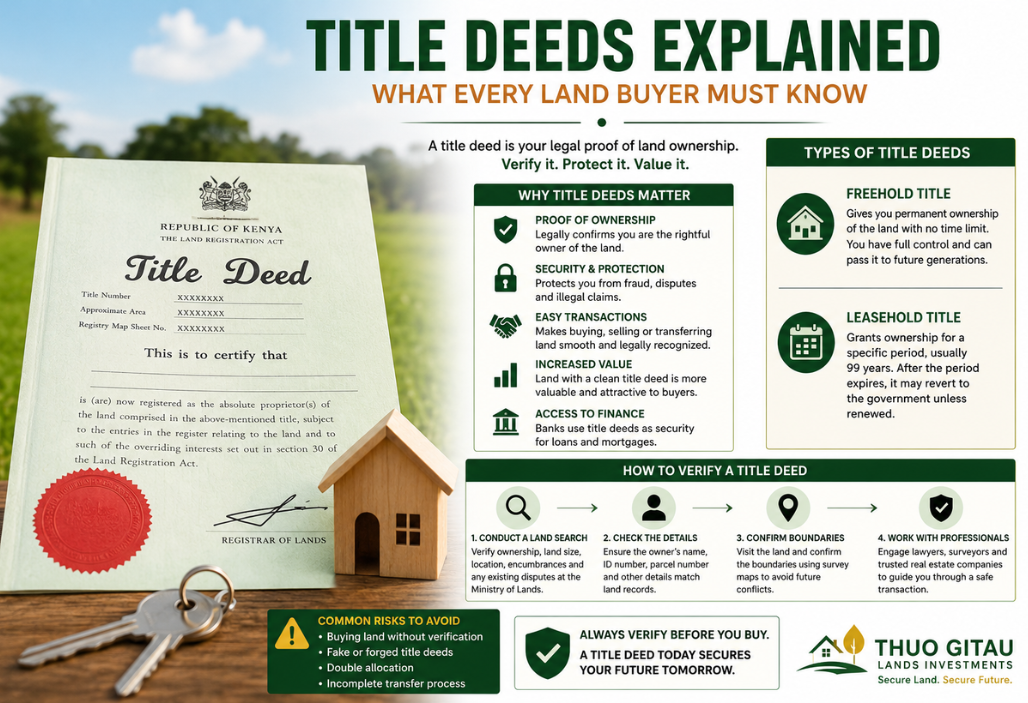
Title Deeds Explained: What Every Land Buyer Must Know.
Introduction
A title deed is one of the most important legal documents in any land transaction. Whether you are buying land for investment, building a home, farming, or commercial development, understanding title deeds is essential. In Kenya’s growing real estate market, many buyers lose money through fake documents, ownership disputes, and incomplete transfers because they do not fully understand how title deeds work.
A title deed serves as legal proof that a person owns a specific piece of land. Without a genuine and properly registered title deed, land ownership can become risky and complicated. Every land buyer must therefore understand the importance of title deeds before making any property investment decision.
What Is a Title Deed?
A title deed is an official government-issued document that proves legal ownership of land or property. It contains important information such as:
- The owner’s full name
- The parcel or plot number
- The size of the land
- The location of the property
- Registration details
- The type of land ownership
The Ministry of Lands issues title deeds after land ownership has been legally registered. Once issued, the document protects the owner’s rights under Kenyan land laws.
Why Title Deeds Matter
Legal Proof of Ownership
A title deed confirms who legally owns the property. It protects landowners from disputes, fraud, and illegal claims.
Protection Against Fraud
Land fraud remains one of the biggest challenges in real estate. A genuine title deed helps buyers avoid scams involving fake land sales or double allocation.
Secure Property Transactions
When selling, transferring, or inheriting land, the title deed makes the process legally recognized and easier to complete.
Increased Land Value
Land with a clean title deed is more attractive to buyers and investors because ownership is clear and secure.
Access to Loans and Financing
Banks and financial institutions often require title deeds as security before approving mortgages or land-related loans.
Types of Title Deeds in Kenya.
Freehold Title Deed
A freehold title deed gives the owner permanent ownership of the land. The owner has full rights over the property and can transfer it to future generations without time limitations.
Leasehold Title Deed
A leasehold title deed grants ownership for a specific number of years, commonly 99 years. After the lease period expires, ownership may return to the government unless renewed.
Understanding the difference between freehold and leasehold title deeds helps buyers make informed investment decisions.
How to Verify a Title Deed
Before purchasing land, buyers should always confirm that the title deed is genuine and legally registered.
Conduct a Land Search
An official land search at the Ministry of Lands helps confirm:
- The registered owner
- Land size and location
- Existing loans or restrictions
- Any disputes linked to the property
Check the Title Deed Details
Ensure the information on the title deed matches the seller’s identification documents and land records.
Confirm Land Boundaries
Buyers should physically inspect the land and compare it with survey maps to avoid future boundary conflicts.
Verify the Serial Numbers and Stamps
Authentic title deeds contain official government stamps, signatures, and registration numbers that can be verified through the relevant authorities.
Common Problems Related to Title Deeds
Fake Title Deeds
Some fraudsters create counterfeit documents to sell land illegally. Buyers who fail to verify ownership risk losing their money.
Double Allocation
This happens when the same piece of land is sold or allocated to multiple people, leading to ownership disputes.
Incomplete Land Transfers
Failure to complete official ownership transfer procedures can create future legal complications.
Missing Records
Poor record management or historical land disputes can sometimes affect ownership verification.
Important Questions Every Buyer Should Ask
Before purchasing land, every buyer should ask:
- Is the title deed genuine?
- Is the land free from disputes?
- Has the ownership transfer process been completed properly?
- Are there loans or restrictions attached to the property?
- Does the seller legally own the land?
These questions help buyers avoid costly mistakes during land transactions.
The Importance of Professional Guidance
Working with experienced land professionals, lawyers, and surveyors helps buyers understand title deeds and avoid legal risks. Professional guidance ensures:
- Proper documentation
- Genuine ownership verification
- Legal compliance
- Secure land transfer procedures
This protects buyers from fraud and increases confidence during the purchasing process.
Conclusion
A title deed is the foundation of secure land ownership. It protects property rights, confirms legal ownership, and ensures smooth land transactions. Every land buyer should understand how title deeds work, how to verify them, and the risks involved in purchasing land without proper documentation.
As Kenya’s real estate sector continues to grow, knowledge about title deeds is becoming increasingly important. Buyers who prioritize genuine documentation and proper verification can invest in land confidently and securely while protecting their long-term financial future.