

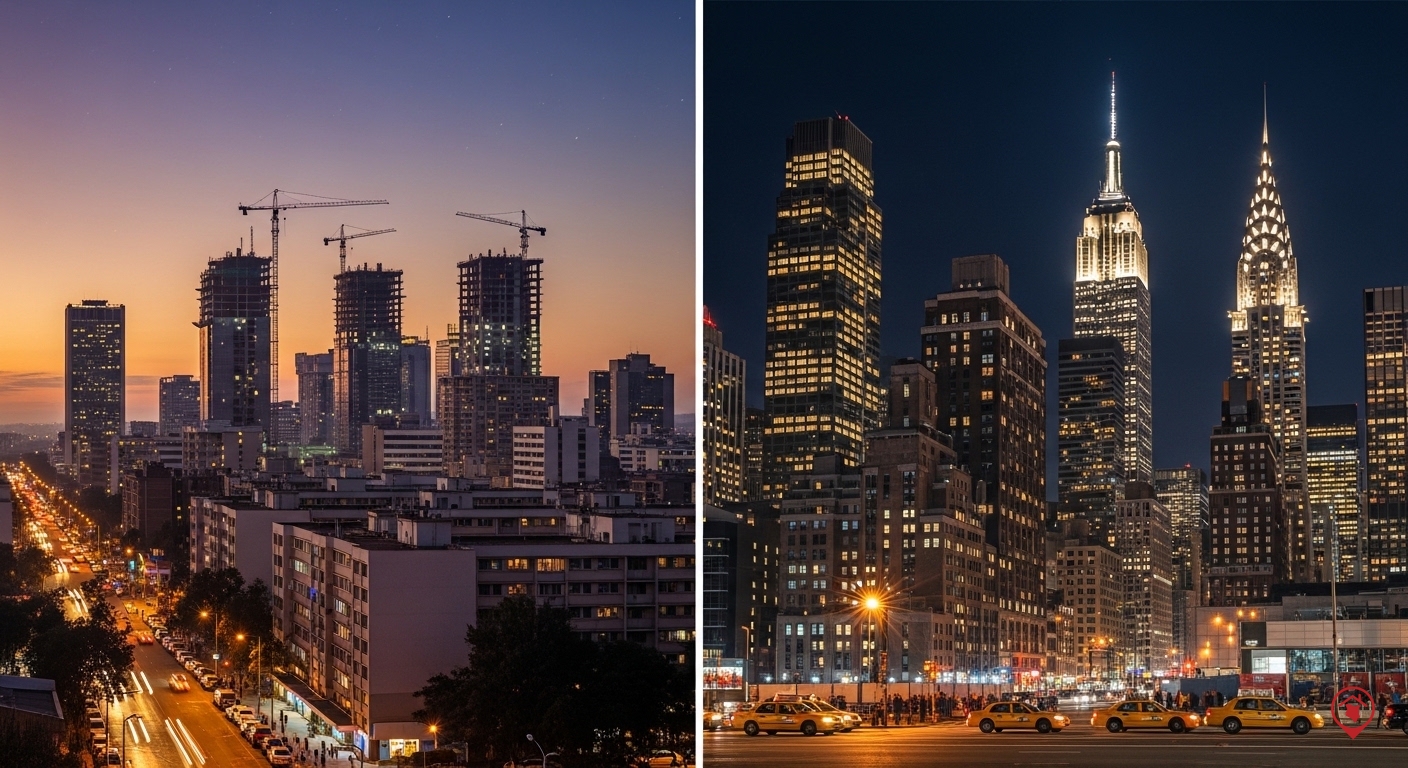
Are Houses Getting Smaller and More Expensive? Is Nairobi Becoming the Next New York?
- Across Nairobi, especially in areas such as Kilimani, Kileleshwa, Westlands, and along the Expressway corridor, one trend is becoming harder to ignore: homes are getting smaller.
- Developers are increasingly maximizing the number of units within limited land space, a move largely driven by rising land costs and the need to keep projects commercially viable.
- As land becomes more expensive, developers naturally try to spread that cost across more units, which often means building upwards and creating smaller spaces.
I recently attended a conference and, as I was socialising, I could not help but overhear a conversation about how houses in Nairobi are shrinking while the prices keep going up.
As if my phone could overhear the conversation too, later on I bumped into a few videos on social media as soon as I logged in, and yes, the houses I saw being advertised were smaller and more expensive.
Instantly, I was reminded of the real estate situation in New York City.
For a moment, I paused and asked myself: Are we slowly heading in the same direction?
READ ALSO: Nairobi vs Dubai: A Tale of Two Real Estate Markets
The Shift Towards Smaller Living Spaces
Across Nairobi, especially in areas such as Kilimani, Kileleshwa, Westlands, and along the Expressway corridor, one trend is becoming harder to ignore: homes are getting smaller.
What used to comfortably pass as a spacious two-bedroom apartment is now often being reimagined into tighter layouts, open-plan kitchens, and more compact living spaces.
Developers are increasingly maximizing the number of units within limited land space, a move largely driven by rising land costs and the need to keep projects commercially viable. In many apartment-heavy zones, this has led to high-density developments where square footage is reduced, but the overall ticket price remains high.
In many ways, the focus has shifted from space to location and convenience.
Today, buyers are often willing to trade square footage for proximity to major roads, business hubs, schools, and lifestyle amenities.
But Why Are Prices Still Rising?
This is the part that has many Nairobians asking questions.
If homes are getting smaller, why are they becoming more expensive?
The answer lies in several market realities.
Rising Land Costs
Land in prime areas continues to command premium prices, especially in well-connected neighbourhoods and emerging satellite towns.
As land becomes more expensive, developers naturally try to spread that cost across more units, which often means building upwards and creating smaller spaces.
Construction and Financing Costs
The cost of building materials, labour, compliance approvals, and financing has also risen significantly over the years.
Even when apartment sizes reduce, the cost of delivering modern amenities such as lifts, backup power, boreholes, security systems, and rooftop social spaces keeps pushing asking prices upward.
Location Premium
Nairobi’s property market is increasingly pricing in convenience.
A smaller apartment in Westlands or Kilimani may still cost significantly more than a larger unit in Syokimau or Ruaka simply because of location, accessibility, and rental demand.
Are We Becoming Like New York?
Perhaps not entirely, at least not yet.
But there are similarities worth paying attention to.
New York’s housing market is known for turning space into a luxury, where buyers often pay premium prices for compact apartments simply because of location and demand.
Nairobi seems to be moving in a similar direction, especially within prime urban neighbourhoods.
The difference, however, is that Nairobi still offers alternatives.
Satellite towns such as Syokimau, Kitengela, Ruiru, and Juja are increasingly becoming attractive options for buyers seeking more space at relatively better prices.
This could be Nairobi’s version of suburban migration, where people move slightly further out in exchange for larger homes and better value.
The Bigger Question: What Does Home Mean Today?
Maybe the bigger conversation is not just whether houses are getting smaller. Maybe it is about how our definition of home is changing.
Are buyers now prioritising convenience over size? Is location becoming more important than square footage?
And most importantly, are developers truly responding to market needs, or are buyers simply being forced to compromise?
One thing is certain: Nairobi’s real estate market is evolving, and it is raising important questions about affordability, urban planning, and the future of city living.
Perhaps the real question is not whether we are becoming like New York. It is whether Nairobi is creating its own unique urban housing story.