

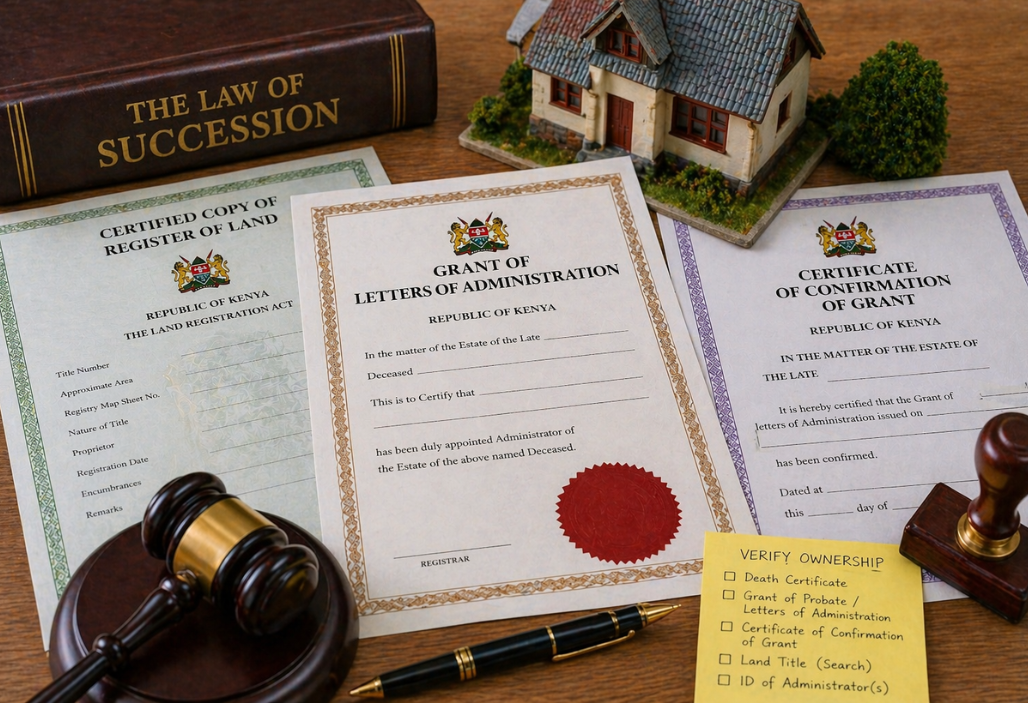
How to Verify Ownership If the Owner Is Deceased
Buying or dealing with land where the registered owner is deceased can be risky if you don’t follow the correct legal process. In Kenya, ownership does not automatically transfer to family members after death. There is a formal legal procedure known as succession that must be completed first.
If you skip this process, you risk buying land that legally cannot be sold, leading to disputes or total loss of your investment.
This guide explains how to verify land ownership when the owner is deceased, step by step.
1. Understand That Ownership Does Not Transfer Automatically
When a landowner dies, the property becomes part of their estate.
- No one (not even a spouse or children) can legally sell it immediately
- The land must go through a legal process called succession
- The court determines the rightful beneficiaries
In Kenya, this process is governed by the Law of Succession Act, and ownership can only be transferred after court approval .
2. Confirm the Death of the Registered Owner
Start by verifying that the registered owner is indeed deceased.
Key document:
- Death Certificate
This document is essential because it is the first legal requirement in initiating succession and proving the owner is no longer alive .
3. Conduct an Official Land Search
Even if the owner is deceased, you must confirm what the land registry shows.
Do a land search to verify:
- Name of the registered owner
- Title number
- Land size and location
- Any encumbrances (loans, disputes)
This confirms whether the land is still registered in the deceased’s name which is usually the case before succession is completed.
4. Check If Succession Has Been Done
This is the most important step.
Ask for proof that succession has been completed.
Key documents to request:
- Grant of Probate (if there was a will)
- Letters of Administration (if no will exists)
- Certificate of Confirmation of Grant
These documents are issued by the court and give legal authority to manage and distribute the estate .
Without these documents, no one has legal authority to sell the land.
5. Identify the Legal Administrator or Executor
Only specific people can deal with the deceased’s land:
- Executor (named in a will)
- Administrator (appointed by the court)
The court officially appoints these individuals through probate or letters of administration, giving them authority to manage and transfer the estate .
Red Flag:
If someone claims to be selling the land but is not listed in these documents, the transaction is risky.
6. Verify the Beneficiaries
After succession, the court confirms who inherits the land.
Check the Certificate of Confirmation of Grant to see:
- Names of beneficiaries
- How the land is distributed
- Who is entitled to sell
If multiple beneficiaries are involved, all must consent to the sale.
7. Ensure the Title Has Been Transferred
Even after succession, the land must be formally transferred at the lands registry.
Until this happens:
- The title may still be in the deceased’s name
- The sale may not be legally valid
Ownership transfer only becomes official after registration with the Ministry of Lands .
8. Trace the Ownership History (Root of Title)
Go beyond the current owner and check the full ownership chain.
This includes:
- Original allocation
- Previous transfers
- Any irregular changes
Tracing the root of title helps detect fraud or illegal transfers .
9. Watch Out for Common Risks
Buying land from a deceased owner comes with specific risks:
1. Family Disputes
Some beneficiaries may disagree on the sale.
2. Incomplete Succession
Land may still be under court process.
3. Fraudulent Sellers
Relatives may attempt to sell without legal authority.
4. Multiple Claims
Different family members may claim ownership.
These risks make due diligence critical.
10. Always Involve a Lawyer
A qualified property lawyer will:
- Verify succession documents
- Confirm legal ownership
- Check for disputes
- Guide the transfer process
Given the legal complexity, professional help is essential.
11. Key Documents Checklist
Before proceeding with any purchase, ensure you have:
- Death Certificate
- Title Deed
- Grant of Probate or Letters of Administration
- Certificate of Confirmation of Grant
- National IDs of administrators/beneficiaries
- Land search results
Missing any of these is a major warning sign.
Conclusion
Verifying ownership when the owner is deceased requires more than a simple title check. You must confirm that:
- Succession has been legally completed
- The seller has authority from the court
- The beneficiaries are properly identified
- The land is ready for transfer
In Kenya, land belonging to a deceased person cannot be sold legally without going through succession.
The safest approach is simple:
No succession, no deal.
Taking the time to verify these steps protects you from fraud, disputes, and costly legal battles ensuring your land investment is secure and legitimate.