

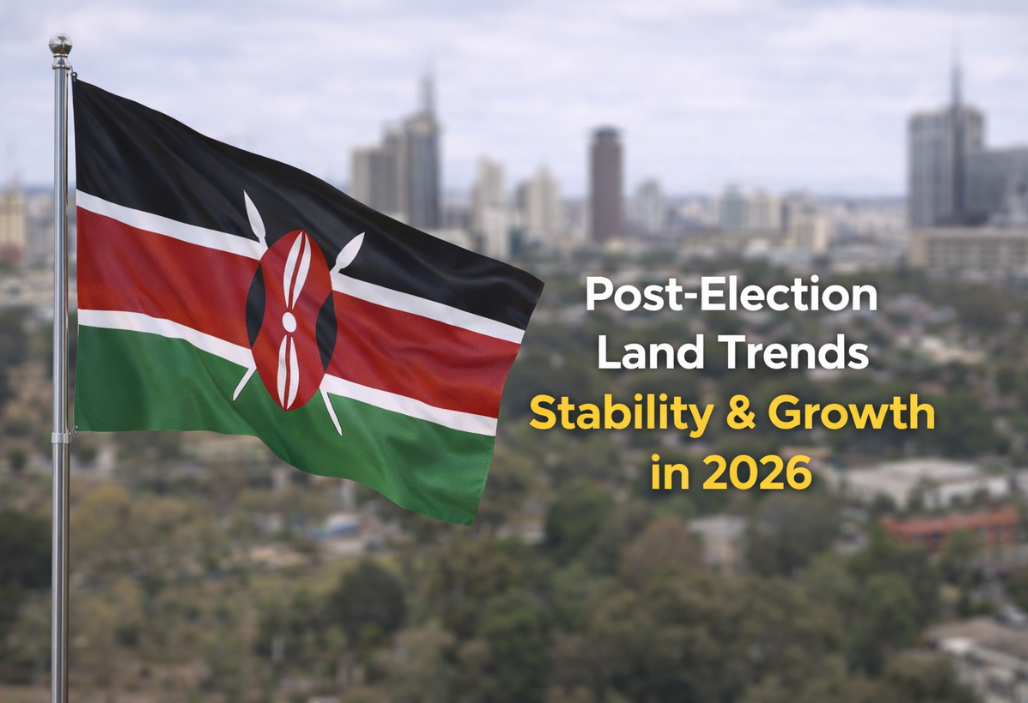
Post-Election Land Trends: Stability and Growth in 2026
Kenya’s real estate sector has historically been influenced by election cycles. Investors, developers, and buyers often adopt a cautious approach before elections due to uncertainty. However, once elections pass peacefully, the market tends to stabilize and gradually recover, creating new opportunities for land investment.
As we move through 2026, the land market in Kenya is showing clear signs of stability, resilience, and strategic growth, making it an important period for both new and experienced investors.
1. The Post-Election Effect on Land Markets
Election periods in Kenya typically slow down real estate activity.
- Investors adopt a “wait-and-see” approach
- Developers delay new projects
- Buyers postpone major financial decisions
This cautious behavior is driven by uncertainty around political stability and economic direction.
However, once elections conclude and stability returns, confidence gradually improves, leading to renewed activity in the property market.
2. 2026: A Year of Stability and Market Reset
The year 2026 is being described by analysts as a transition and consolidation phase in Kenya’s real estate sector.
Key characteristics include:
- Improved macroeconomic stability
- Stabilizing currency and inflation
- Gradual return of investor confidence
- Increased focus on long-term value
Economic indicators suggest a relatively stable business environment, supporting moderate growth in real estate.
Rather than rapid expansion, the market is focusing on sustainable growth and risk management.
3. Shift Toward Cautious Investment
Even after elections, investors remain strategic.
In 2026:
- Developers are prioritizing completion of ongoing projects
- New project launches are limited
- Investors are focusing on low-risk opportunities
This reflects a shift from aggressive expansion to controlled, disciplined investment.
The result is a more stable and less speculative land market.
4. Rising Demand in Satellite Towns
One of the biggest trends shaping land investment in 2026 is the growth of satellite towns around Nairobi.
Popular areas include:
- Ruiru
- Kitengela
- Juja
- Ngong
- Athi River
These areas are attracting buyers due to:
- Lower land prices
- Improved infrastructure (roads, bypasses)
- Proximity to Nairobi
Rental demand and land value appreciation in these regions continue to rise, making them key investment hotspots.
5. Strong Demand for Affordable Land
The demand for affordable land and housing remains one of the strongest drivers in 2026.
Factors fueling this demand include:
- Rapid urbanization
- Growing middle class
- Government housing initiatives
- Young population entering the property market
Buyers are now more value-conscious, focusing on affordability, location, and long-term returns rather than speculation.
6. Infrastructure Driving Land Value Growth
Infrastructure development continues to play a major role in post-election land trends.
Key projects influencing land prices include:
- Road expansions and bypasses
- Railway developments
- Industrial zones
- Special Economic Zones (SEZs)
Areas near infrastructure projects tend to experience faster land appreciation, making them attractive to investors.
7. Increased Focus on Due Diligence
Post-election buyers are more informed and cautious than before.
Trends include:
- Increased demand for verified title deeds
- Greater use of digital land platforms
- More involvement of lawyers and surveyors
- Avoidance of speculative or risky deals
This shift is creating a more transparent and secure land market.
8. Limited Supply Supporting Price Growth
With developers slowing new projects, supply of new land developments is relatively limited.
At the same time:
- Demand remains steady
- Population growth continues
- Urban expansion is ongoing
This imbalance supports gradual land price appreciation, especially in high-demand areas.
9. Opportunities for Smart Investors
The post-election period offers unique opportunities:
1. Buying During Stability
Prices are more predictable, reducing risk.
2. Investing in Growth Corridors
Satellite towns and infrastructure zones offer strong returns.
3. Long-Term Investment Strategy
Land remains one of the safest long-term investments in Kenya.
Experts note that markets often rebound after elections, especially when supported by stable economic conditions.
10. Outlook: Growth with Caution
Looking ahead, Kenya’s land market in 2026 is expected to experience:
- Moderate but steady growth
- Increased investor confidence
- Continued urban expansion
- Strategic (not speculative) development
However, caution remains as the country gradually approaches the next election cycle.
Conclusion
The post-election period in Kenya has historically been a time of market recovery and opportunity, and 2026 is no different.
While the sector is currently in a cautious and stable phase, key indicators point toward:
- Growing demand
- Strong performance in satellite towns
- Increased focus on affordability
- Gradual land value appreciation
For investors, this is a time to be strategic not rushed.
By focusing on location, infrastructure, and long-term value, you can take advantage of the stability in 2026 and position yourself for future growth in Kenya’s dynamic land market.