

What Happens If You Don’t Pay Land Rates
Owning land in Kenya comes with responsibilities, and one of the most important is paying land rates. These are annual taxes charged by county governments to fund essential services such as roads, drainage, waste management, and street lighting.
Many landowners overlook or delay these payments, not realizing the serious consequences that can follow. If you fail to pay land rates, penalties can accumulate quickly, and in extreme cases, you may even lose your property.
This guide explains what happens if you don’t pay land rates in Kenya, including penalties, legal action, and how to protect your investment.
1. Accumulation of Penalties and Interest
The first and most immediate consequence of failing to pay land rates is the accumulation of penalties and interest.
- Counties charge interest on unpaid rates monthly
- Rates typically range between 1% to 3% per month depending on the county
- Interest continues to accumulate until the full amount is paid
Over time, a small unpaid amount can grow into a large debt, making it harder to clear.
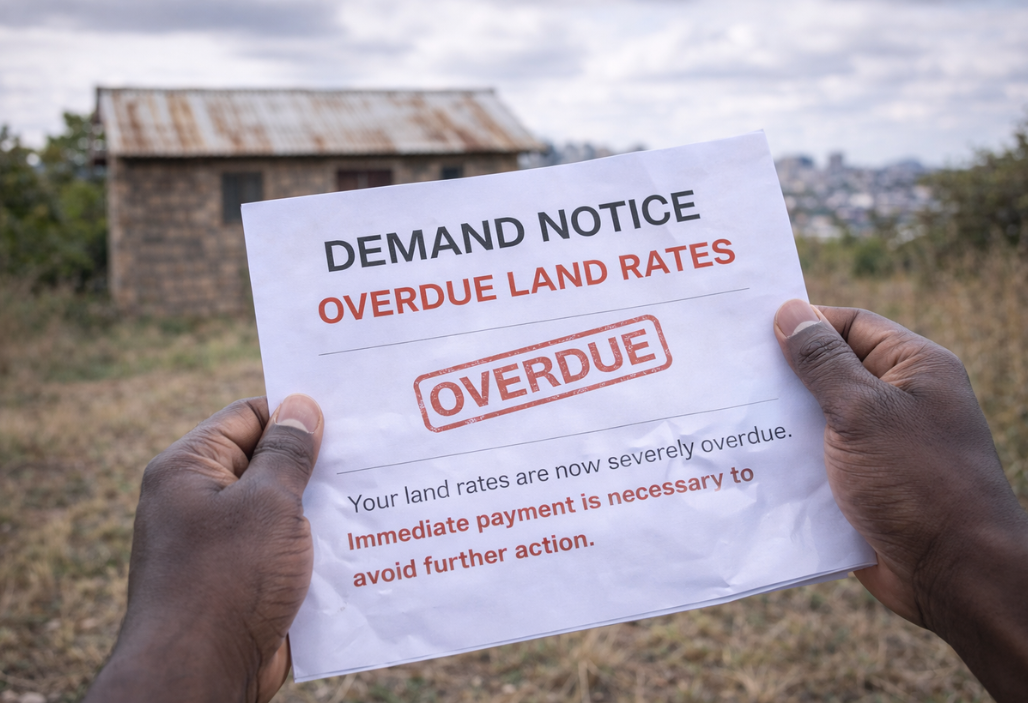
2. Issuance of Demand Notices
When you default, the county government may issue a formal demand notice requiring you to pay within a specific period (often around 60 days).
If you ignore the notice:
- Additional penalties may be applied
- The case may escalate to legal enforcement
- The county may take further action to recover the debt
This is usually the warning stage before stricter measures are taken.
3. Denial of County Services
If your land rates remain unpaid, you may lose access to important county services such as:
- Garbage collection
- Sewer services
- Local infrastructure support
Counties may restrict services until outstanding rates are cleared
This can affect both residential and commercial property owners.
4. Restriction on Property Transfer
One of the biggest consequences of unpaid land rates vvnis that you cannot transfer or sell your land.
Before any transfer, you must obtain a Land Rates Clearance Certificate, which confirms that all dues have been paid.
Without this certificate:
- You cannot sell the land
- You cannot transfer ownership
- Banks may refuse to finance the property
This means unpaid land rates can block major transactions
5. Legal Action by the County Government
If you continue to ignore payment, the county government can take legal action against you.
This may include:
- Filing a lawsuit to recover unpaid rates
- Court orders requiring payment
- Additional legal costs added to your debt
The law gives counties authority to enforce payment through legal means
Legal disputes can be costly and time-consuming for landowners.
6. Registration of a Charge Against Your Land
In some cases, the county government can register the unpaid land rates as a charge (debt) against your property.
This means:
- The debt is officially tied to your land
- It takes priority over other claims
- The property cannot be easily sold or transferred
The charge remains until all dues are cleared
7. Risk of Property Auction
In extreme cases, failure to pay land rates can lead to auctioning of your property.
This is one of the most serious consequences and usually happens when:
- The debt has accumulated over a long period
- The owner ignores notices and legal action
- The county decides to recover its money
The property may be sold to recover unpaid rates and penalties
This means you could lose your land entirely.
8. Possible Fines or Legal Penalties
Some county laws impose additional penalties such as:
- Annual fines (e.g., up to 25% of unpaid rates in some cases)
- Monetary fines
- In extreme cases, legal penalties including prosecution
These penalties are meant to encourage compliance and reduce default
9. Impact on Investment Value
Unpaid land rates can also affect your property’s value and attractiveness to buyers.
Issues include:
- Buyers avoiding land with outstanding dues
- Reduced market value
- Delays in development projects
- Additional costs for new buyers
In some cases, buyers may demand that all arrears be cleared before completing a purchase.
10. How to Avoid Problems With Land Rates
To protect your investment, always:
- Pay land rates on time (usually annually)
- Check your rates status regularly online
- Clear any outstanding arrears early
- Take advantage of penalty waivers when offered
- Keep your clearance certificate safely
Staying compliant helps you avoid penalties and protects your property.
Conclusion
Failing to pay land rates in Kenya can lead to serious consequences, including:
- Accumulating penalties and interest
- Denial of county services
- Inability to transfer property
- Legal action
- Registration of debt against your land
- Auction and loss of property
Land rates are not optional, they are a legal obligation tied to land ownership.
To avoid financial loss and legal trouble, always ensure your land rates are paid on time. Keeping your payments up to date protects your investment and ensures smooth ownership and future transactions.