

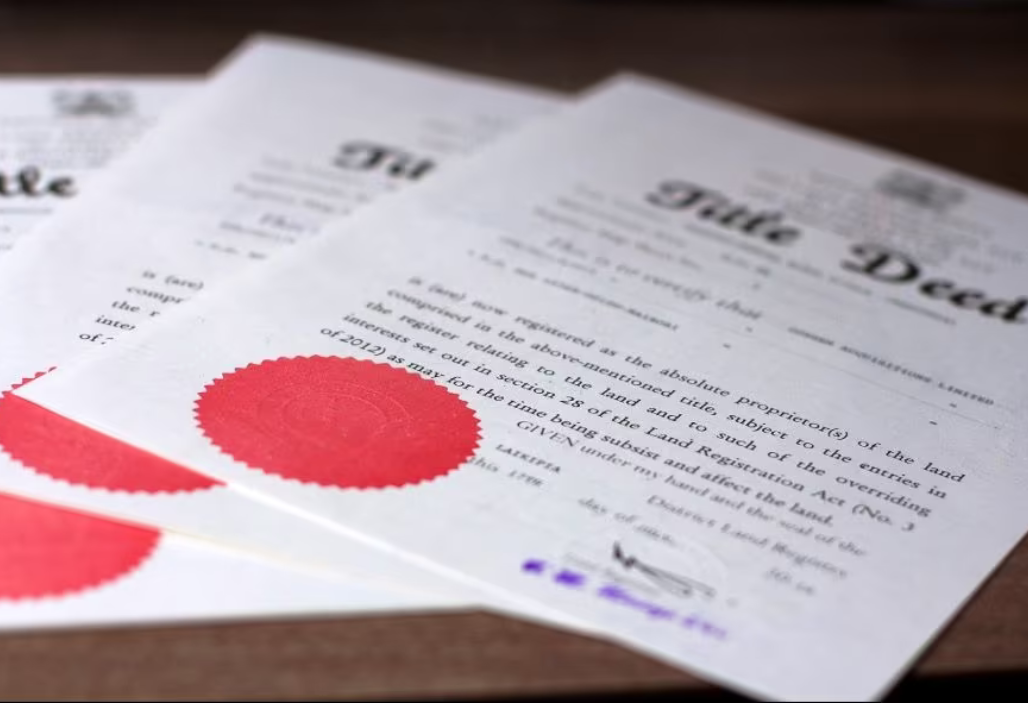
How to Read a Title Deed in Kenya (Complete Guide for Land Buyers)
Understanding how to read a title deed is one of the most critical skills for any land investor in Kenya. Whether you’re buying your first plot or expanding your portfolio, this document is your ultimate proof of ownership and protection against fraud.
In this guide, we break down how to read a title deed step-by-step, highlight key sections, and show you what to watch out for.
What Is a Title Deed?
A title deed is a legal document issued by the Ministry of Lands that proves ownership of a piece of land or property. It contains essential details such as the owner’s name, parcel number, size, and any restrictions tied to the land.
Without a valid title deed, your claim to land is not legally enforceable, making it a crucial document in any real estate transaction.
Structure of a Kenyan Title Deed
A standard Kenyan title deed is typically a 4-page booklet, and each section carries important information. Understanding each page helps you detect errors or fraud.
1. Cover Page (Page 1)
This is the first and most important section.
Key details to check:
- Title number (unique land identifier)
- Owner’s full name and ID
- Land size (hectares or acres)
- Location and registry map sheet
- Date of issue
- Official government seal
Tip: Ensure the owner’s name matches the seller’s ID exactly.
According to recent updates, modern title deeds also include QR codes and watermarks for verification.
2. Property Details Section (Page 2)
This section gives deeper information about the land.
What to look for:
- Parcel number (must match title number)
- Exact location of the land
- Land tenure (Freehold or Leasehold)
- Registrar’s signature and stamp
Important:
- Freehold = You own the land permanently
- Leasehold = Ownership is for a fixed period (e.g., 99 years)
3. Encumbrances Section (Page 3)
This is one of the most overlooked but critical sections.
Encumbrances include:
- Bank loans (charges or mortgages)
- Caveats (legal claims or disputes)
- Restrictions on land use
If this section is not empty, it means:
The land may have financial or legal obligations attached
For example, if a bank is listed, the land is likely used as collateral.
4. Back Cover (Page 4)
This page usually repeats key details and includes:
- Serial numbers
- Document codes
- Additional authentication marks
These features help prevent forgery and confirm authenticity.
Key Things to Verify When Reading a Title Deed
Reading a title deed is not just about understanding, it’s about verification.
1. Confirm Ownership
Ensure the name on the title deed matches:
- Seller’s ID
- Sale agreement
A mismatch is a major red flag.
2. Check the Title Number
The title number should:
- Match official land registry records
- Be consistent across all pages
If it doesn’t match, the document could be fake.
3. Review Encumbrances Carefully
Never skip this section.
Ask:
- Is there a loan on the land?
- Are there disputes or restrictions?
These can delay or block ownership transfer.
4. Verify Authenticity
With rising land fraud cases in Kenya, verification is essential.
You can:
- Conduct a search via Ardhisasa
- Visit the land registry
Digital systems now make it easier to confirm ownership and avoid scams.
5. Inspect Physical Features
A genuine title deed should have:
- Clear, consistent printing
- Official seal and watermark
- No spelling mistakes
Poor quality or inconsistencies may indicate forgery.
Common Mistakes to Avoid
Many land buyers lose money simply because they don’t read title deeds properly.
Avoid these mistakes:
- Ignoring the encumbrance section
- Failing to conduct a land search
- Trusting photocopies instead of originals
- Not confirming the title number
Pro Tips for Land Buyers
- Always involve a lawyer or land expert
- Cross-check details with official records
- Visit the land physically (don’t rely on documents only)
- Ensure all pages of the title deed are present
Final Thoughts
Knowing how to read a title deed in Kenya is a powerful skill that protects your investment. It helps you confirm ownership, detect fraud, and make informed decisions before committing your money.
At Thuo Gitau Lands Investments, we always emphasize one rule:
Never buy land before fully understanding the title deed.
If you master this process, you’re not just buying land, you’re securing your future.