

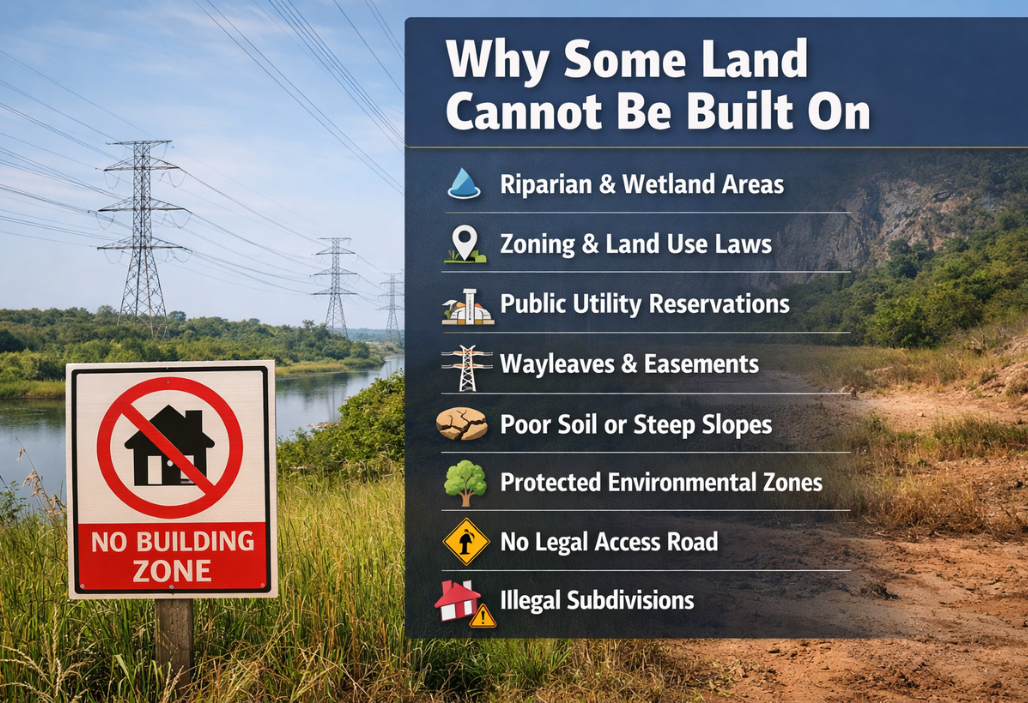
Why Some Land Cannot Be Built On
Buying land is one of the biggest investments you can make, but not every piece of land can be developed. Many buyers assume that once they own a plot, they can build anything they want. In reality, some land cannot be built on due to legal, environmental, zoning, or structural restrictions.
Understanding these limitations is very important before buying land to avoid losses, disputes, or demolition orders. In this guide, we explain the main reasons why some land cannot be built on in Kenya and what every investor should check before purchasing.
1. Riparian Land Restrictions
One of the most common reasons land cannot be built on is because it falls under riparian land, which is land located near rivers, lakes, dams, or wetlands.
Kenyan law requires a protected buffer zone along water bodies to prevent flooding and environmental damage. The required distance can range from 6 meters to 30 meters from the highest water mark, depending on the size of the water body.
Construction on riparian land is restricted because:
- The soil may be weak due to underground water
- Flooding risk is high
- Environmental laws protect wetlands
- Buildings may be demolished by authorities
In some cases, even if you have a title deed, the government can still stop development if the land is within a protected zone.
2. Zoning and Land Use Regulations
Not all land is meant for residential construction. County governments use zoning laws to control how land should be used.
Land may be zoned for:
- Agriculture
- Residential use
- Commercial use
- Industrial use
- Public utilities
- Conservation areas
If land is zoned for farming, for example, you may not be allowed to build houses without approval. Zoning rules help prevent problems such as building factories in residential areas or houses on land reserved for roads or parks.
Before buying land, you should always confirm the zoning status from the county planning office.
3. Land Reserved for Roads or Public Utilities
Some land cannot be built on because it has been reserved for future government projects such as:
- Road expansion
- Power lines
- Pipelines
- Railways
- Sewer lines
- Schools or hospitals
Planning laws allow the government to control development in areas near strategic installations or public infrastructure.
If you build on land reserved for public use, the structure may be removed without compensation.
4. Wayleaves and Easements
A wayleave or easement allows utility companies or the government to pass infrastructure through private land.
Examples include:
- Electricity transmission lines
- Water pipelines
- Access roads
- Drainage systems
Even though the land belongs to you, the law may restrict what you can build within the wayleave corridor.
For example, you may not be allowed to:
- Build houses under power lines
- Block access roads
- Construct near sewer lines
Failure to follow these rules can lead to demolition or legal disputes.
5. Poor Soil or Unsafe Ground Conditions
Some land cannot support buildings because of soil problems or terrain issues.
Common examples include:
- Swampy land
- Loose or sandy soil
- Landfill or reclaimed land
- Rocky ground
- Steep slopes
Weak soil may not support a strong foundation, making buildings unsafe. In such cases, construction may require expensive engineering work or may not be allowed at all.
This is why professional developers always do soil testing before building.
6. Protected Environmental Areas
Certain land is protected by environmental laws and cannot be developed.
These include:
- Forest land
- Wetlands
- Wildlife corridors
- Water catchment areas
- Conservation zones
Authorities such as environmental agencies can stop construction or order restoration if land is developed without approval.
Even if land was sold, the title can be challenged if the area is protected.
7. Lack of Access Road
Land without a legal access road may also be difficult or impossible to build on.
Before approving construction, authorities check whether the plot has:
- Road access
- Drainage access
- Water supply
- Space for utilities
If the plot is landlocked, you may need an easement from neighbors before building.
Without access, building permits may not be issued.
8. Illegal Subdivision or Unapproved Plots
Sometimes land cannot be built on because it was subdivided illegally.
Problems may include:
- No survey approval
- No planning approval
- No title deed
- Wrong plot size
- Land not registered
In such cases, the county government may refuse development approval even if you bought the land.
Always confirm that the subdivision was approved before buying.
Conclusion
Not all land can be developed, and many buyers only discover restrictions after purchase.
Before buying land, always do proper due diligence, confirm zoning, check the title deed, and consult professionals.
Understanding these factors will help you avoid costly mistakes and ensure that the land you buy can be developed safely.