

Sectional Properties Act: What It Means for Apartment and Plot Owners (2026 Guide)
Kenya’s Sectional Properties Act, Cap. 286, first enacted in 2020 and now firmly established in 2026 as a cornerstone of apartment and multi-unit property law has fundamentally changed how apartments, maisonettes, offices, and other sectional units are owned, managed, and transferred. Whether you’re a homeowner, residential investor, or property developer, this comprehensive guide explains what the Act means for you and why it matters in Kenya’s evolving real estate landscape.
What Is the Sectional Properties Act?
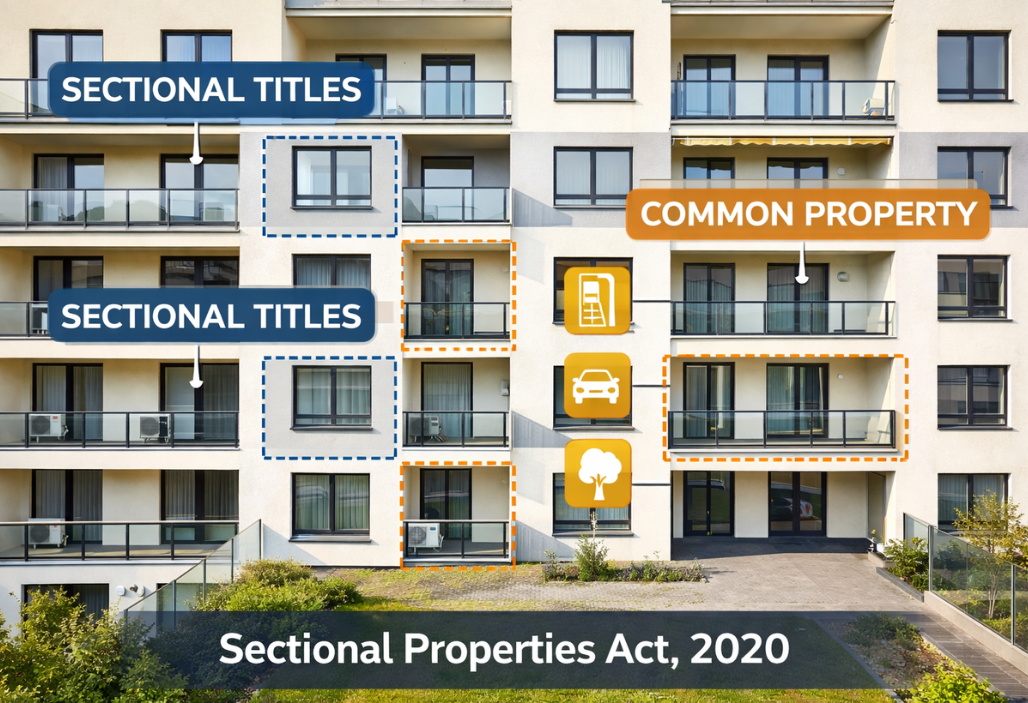
The Sectional Properties Act (SPA) is Kenyan legislation that defines a sectional property as a building divided into multiple units that can be individually owned, plus associated common property owned jointly by all unit holders. Prior to the Act, apartments were often sold through long-term leases or share certificates, systems that lacked clear ownership and legal security. The SPA introduced a modern legal framework to give unit owners true, registered ownership of their individual units and shared rights over common areas.
The law applies where land is held on freehold or leasehold with at least 21 years remaining, and there’s an intention to confer ownership.
Why the Act Was Necessary
Before SPA came into force, most apartments in Kenya were sold under long-term leases or share certificates. These models created several problems:
- Unclear individual ownership rights
- Difficulty in securing mortgages or selling units
- No transparent way to manage common property like lifts, gardens, or parking
- Reliance on developers for title issuance and dispute control
The new Act corrected these gaps by requiring individual title deeds (sectional titles), creating clear ownership rights, and mandating structured management of multi-unit properties.
What Sectional Title Ownership Means for Apartment Owners
Under the Sectional Properties Act, once a sectional plan is registered, each owner receives a direct title deed for their unit similar to owning a private house title. This has several important implications:
1. Exclusive Ownership of Your Unit
You legally own your specific apartment, maisonette, or office unit. This includes rights to use, sell, lease, or bequeath your unit independently.
2. Shared Ownership of Common Property
Apart from your private unit, you also hold an undivided share in common property areas such as:
- Corridors, stairwells, and elevators
- Parking bays and driveways
- Gardens and recreational spaces
- Boundary walls and security systems
These shared interests are registered as tenants-in-common under a sectional plan.
3. Formation of a Management Corporation
Once the first unit is registered, a Body Corporate (also called a Corporation or Owners’ Association) is automatically created. This legal entity is responsible for:
- Managing and maintaining common property
- Enforcing by-laws
- Collecting service charges and maintenance levies
- Representing owners in legal and administrative matters
Unit owners participate and vote in decision-making through the Body Corporate.
Legal Rights and Responsibilities of Sectional Owners
Rights
- Sell or transfer your unit independently
- Mortgage your unit with banks or financial institutions
- Lease your unit to tenants
- Participate in governance, voting on budgets, improvements, and rules
- Defend your property rights in court if needed
Responsibilities
- Pay service charges and maintenance levies
- Follow by-laws governing use of common areas
- Maintain your unit in good condition
- Respect rules that protect the rights of other owners and tenants
These duties ensure fair use and upkeep of shared spaces, transparent governance, and financial sustainability of property management.
Importance of Sectional Plans
A sectional plan is the technical core of the Act. It is a geo-referenced architectural plan that clearly:
- Divides a building into individual units
- Highlights common property
- Shows exclusive use areas like parking or storage
- Is approved by a licensed surveyor and the Director of Surveys
Without an approved sectional plan, no sectional title deed can be issued, and property sales, leases, or transfers cannot be legally registered.
Impact on the Real Estate Market
Improved Marketability
Sectional titles are now the official standard for apartment ownership in Kenya. Buyers, investors, and banks require these titles for:
- Legal title transfers
- Mortgage approvals
- Resale transactions
This increases confidence and liquidity in the property market.
Easier Financing
Banks and SACCOs prefer sectional titles because they provide:
- Clear, registered ownership
- Legal security for loans
- Easier enforcement of collateral in default cases
As a result, homebuyers often find it easier to secure mortgages when they own a unit with a sectional title.
Common Challenges to Be Aware Of
Even with the benefits, there are considerations for owners and developers:
- Service charges and maintenance levies can be high if repairs or upgrades are needed. Owners must participate actively in budgeting.
- By-law disputes can arise if owners disagree on conduct rules or shared area use.
- Some older developments originally sold under long-term lease or share certificate systems still need conversion to sectional titles and these conversions must comply with the Act or face restrictions.
Conclusion: Why the Sectional Properties Act Matters
The Sectional Properties Act has ushered in a more secure, transparent, and legally enforceable model of multi-unit property ownership in Kenya. For apartment and plot owners, it means:
✔ True ownership through government-issued sectional titles
✔ Clear rights to sell, lease, or mortgage units
✔ Structured governance via Bodies Corporate
✔ Legal recognition and market acceptance
If you’re buying, selling, or managing sectional property in Kenya in 2026, compliance with the SPA and understanding your rights and obligations under it is essential to protect your investment and enjoy full legal benefits.